"One Student One Chip" First International Bootcamp Successfully Concluded
Chapter 1: Reunion
Our connection with Professor Nursultan Kabylkas began in 2023. At that time, he learned about the "One Student One Chip" initiative from a presentation by Teacher Yungang Bao at the Institute of Computing Technology, Chinese Academy of Sciences. Intrigued by the concept, after thorough discussions, he decided to introduce related courses at Nazarbayev University in Kazakhstan.
In February 2024, Professor Kabylkas adopted the "One Student One Chip" initiative and attempted to guide students in processor design. However, the course was not without challenges. Processor design demands strong hands-on skills, and as the course difficulty increased, fewer students persisted. After continuous experimentation and adjustments, Professor Kabylkas established a foundational course to help students build a solid base. Gradually, more students joined the journey of learning chip design. One of his students, Olzhas, after a year of dedicated effort, successfully completed his own processor chip design and had it taped out.
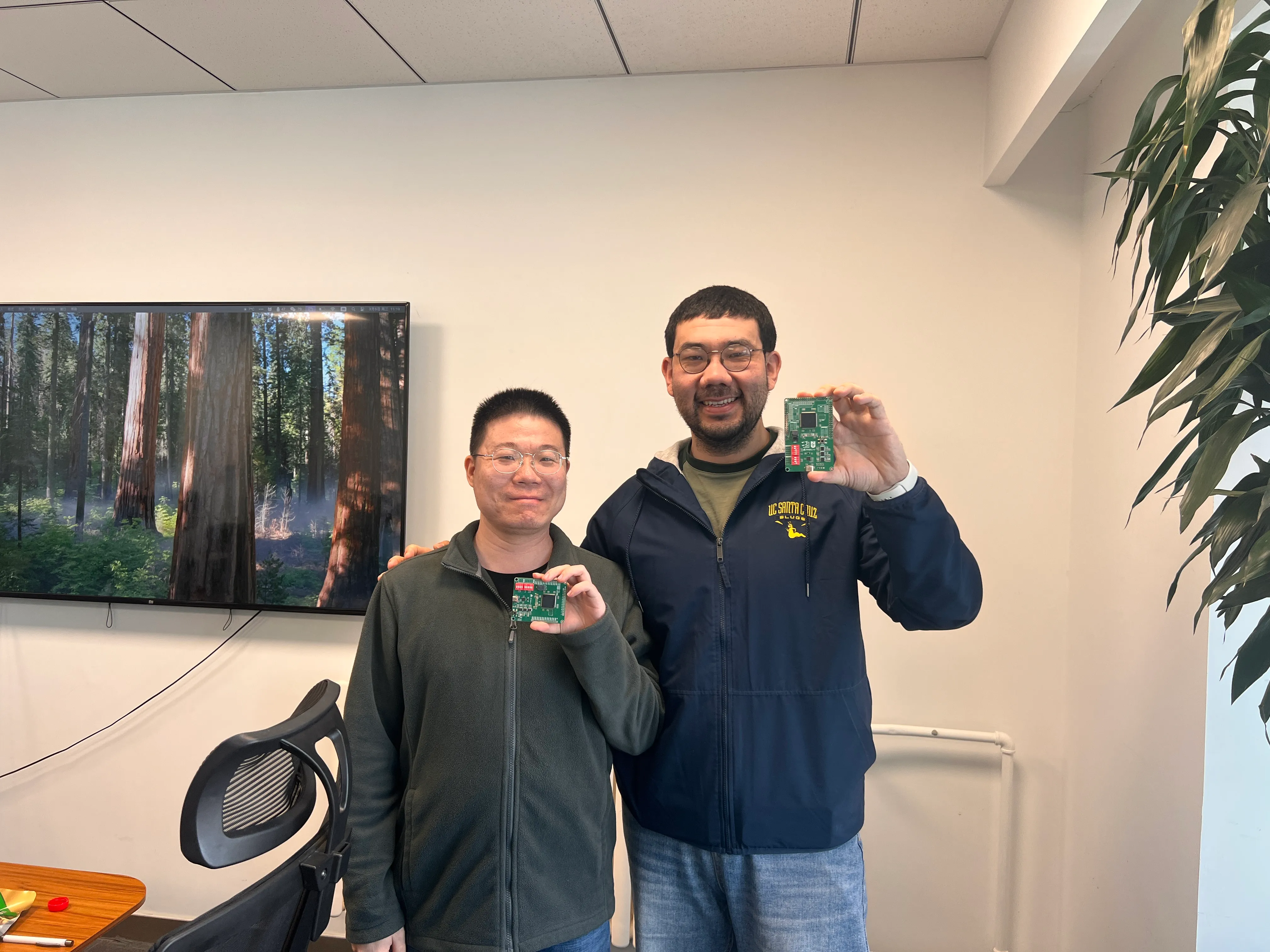
Dr. Zihao Yu and Professor Kabylkas
In March 2025, we invited Professor Kabylkas and his students to Beijing to participate in chip debugging and bring-up. Together, we witnessed the moment the chip was brought up. This achievement was not only a valuable outcome for the instructors and students but also carried special historical significance—it became the first processor chip designed under Kazakhstani leadership. The students involved also became the country's first‑generation processor chip design talents.
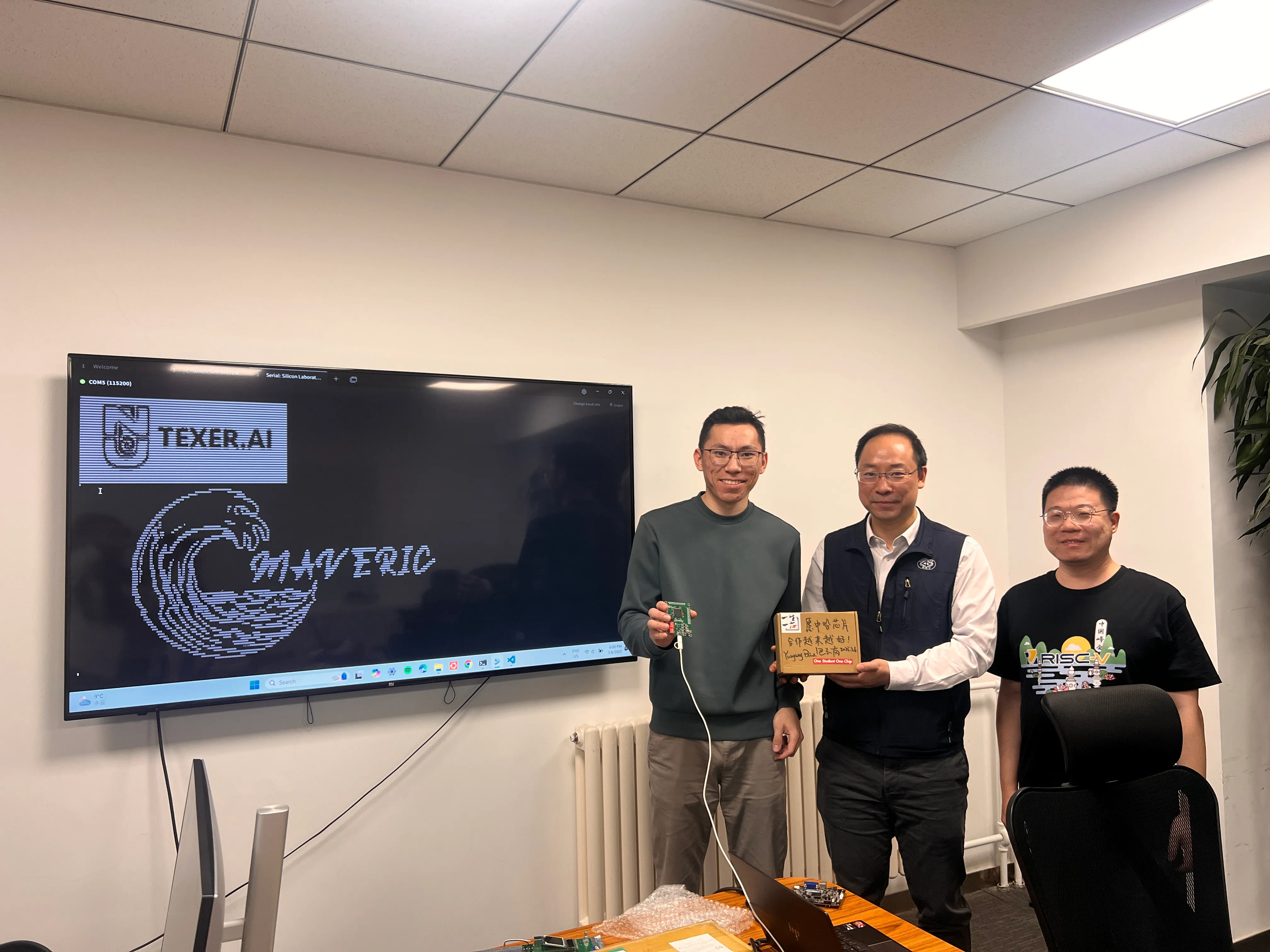
March 2025: Olzhas’s chip successfully passed testing
It was on the basis of this solid collaboration that, when we proposed holding the first "One Student One Chip" international bootcamp in Kazakhstan, Professor Kabylkas offered his full support. Both sides quickly agreed, tentatively scheduling the bootcamp for December 2025 (the local winter break), with a planned duration of two weeks.
Thus, in December 2025, led by Dr. Zihao Yu, the lead instructor of "One Student One Chip", a team of three arrived as scheduled in Astana, the home of Nazarbayev University.
Chapter 2: In Progress
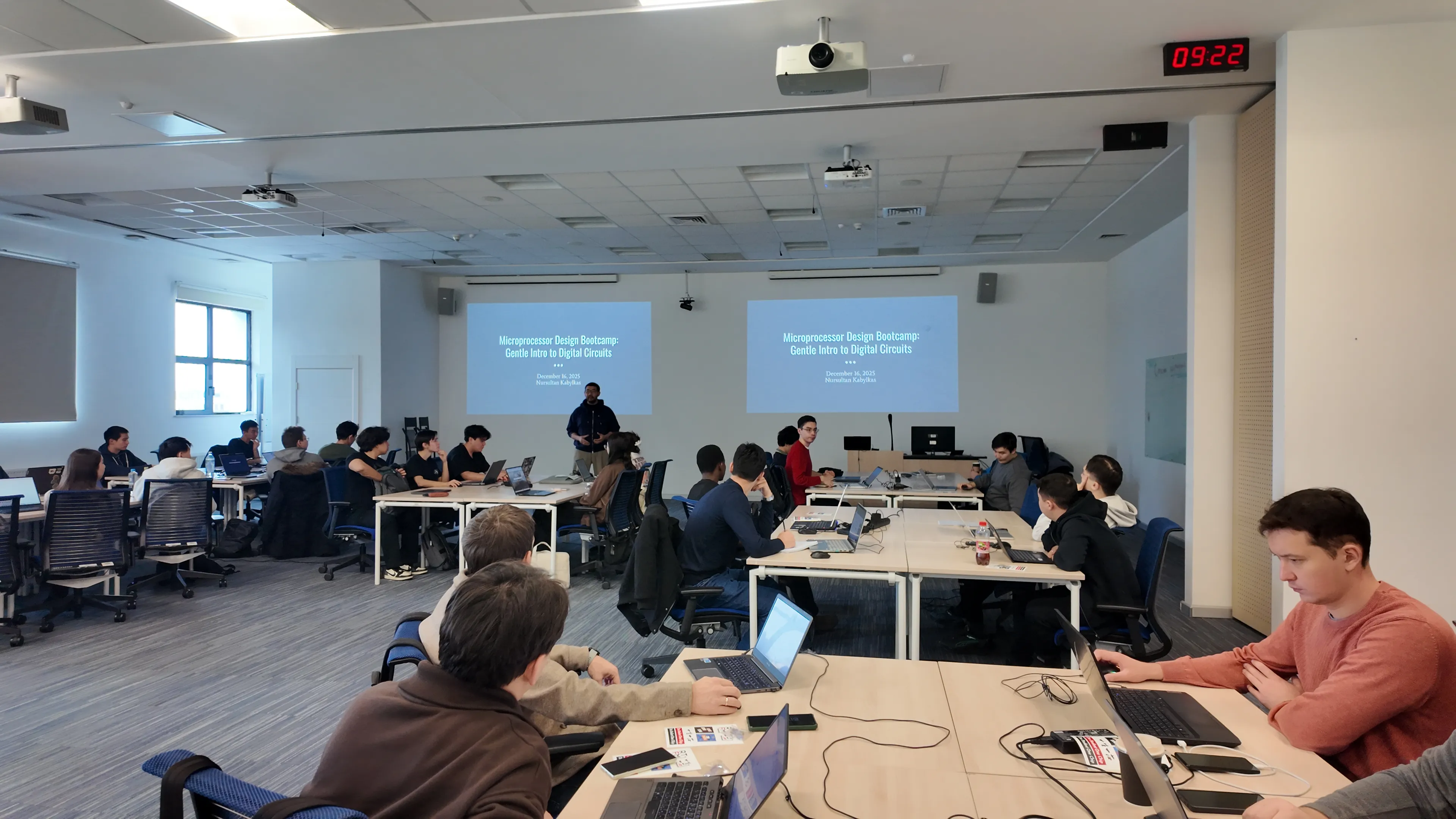
Professor Kabylkas delivered the opening introduction
The bootcamp received over 90 applications. Due to time and space constraints, Professor Kabylkas ultimately selected around 40 participants. Most of them had a background in digital circuits and basic Linux command‑line skills. The majority were university students, but there were also a few industry engineers. We later learned that some participants traveled specifically from other cities to attend the bootcamp in Astana, and some even took annual leave to join.
Given the short duration of only two weeks, Dr. Zihao Yu carefully designed a complete course based on the OSOC lecture notes. The course started from scratch and aimed to guide students to a tapeout‑ready processor supporting eight instructions.
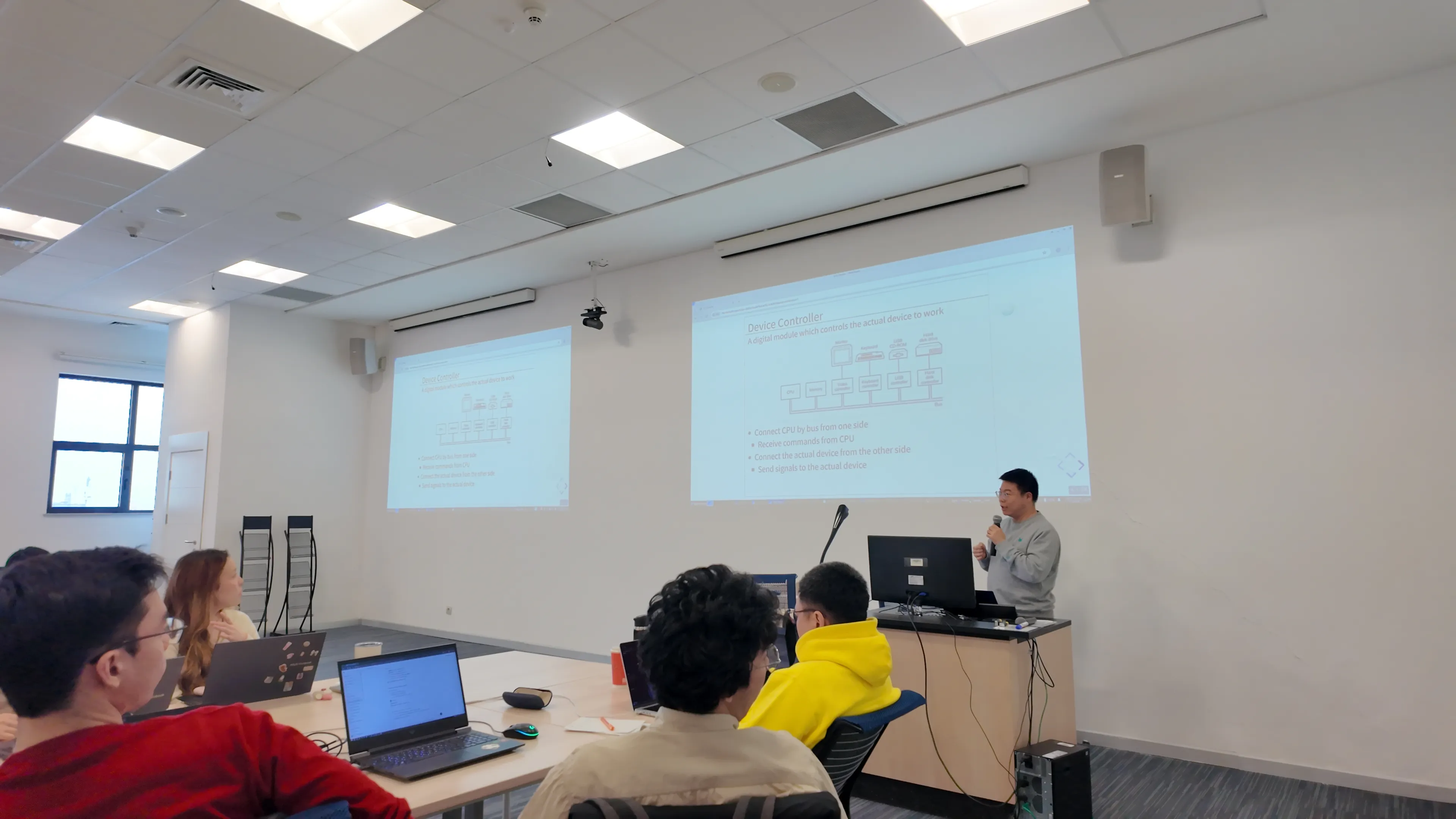
Dr. Zihao Yu instructed at the bootcamp
At the beginning, the students were highly motivated and quickly immersed themselves in the intensive learning. Since most participants already had some foundation in digital circuits, the initial phase progressed relatively smoothly.
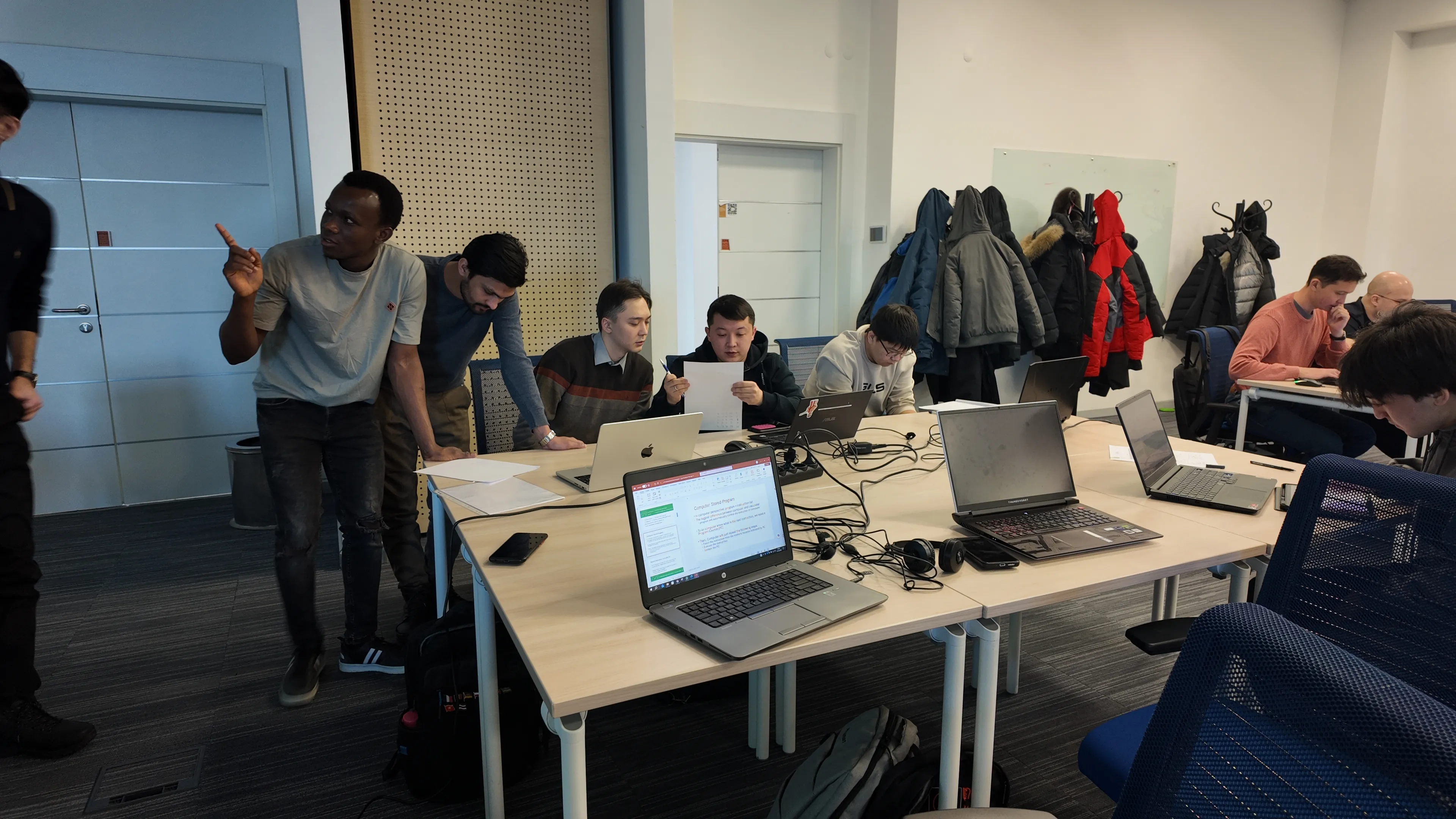
Students discussed and learned together
However, the challenge of covering everything from digital circuit fundamentals to tapeout in just two weeks was immense. Midway through the bootcamp, progress began to diverge. Although most students persisted, some, eager to reach the finish line, skipped basic tasks and directly tackled difficult challenges, leading to debugging dead ends. While answering questions, we repeatedly emphasized: "Slow is fast; a solid foundation is more important than rushing ahead." After that, the students gradually steadied their pace, focusing on their own code and on what they learned each day, rather than merely chasing progress.
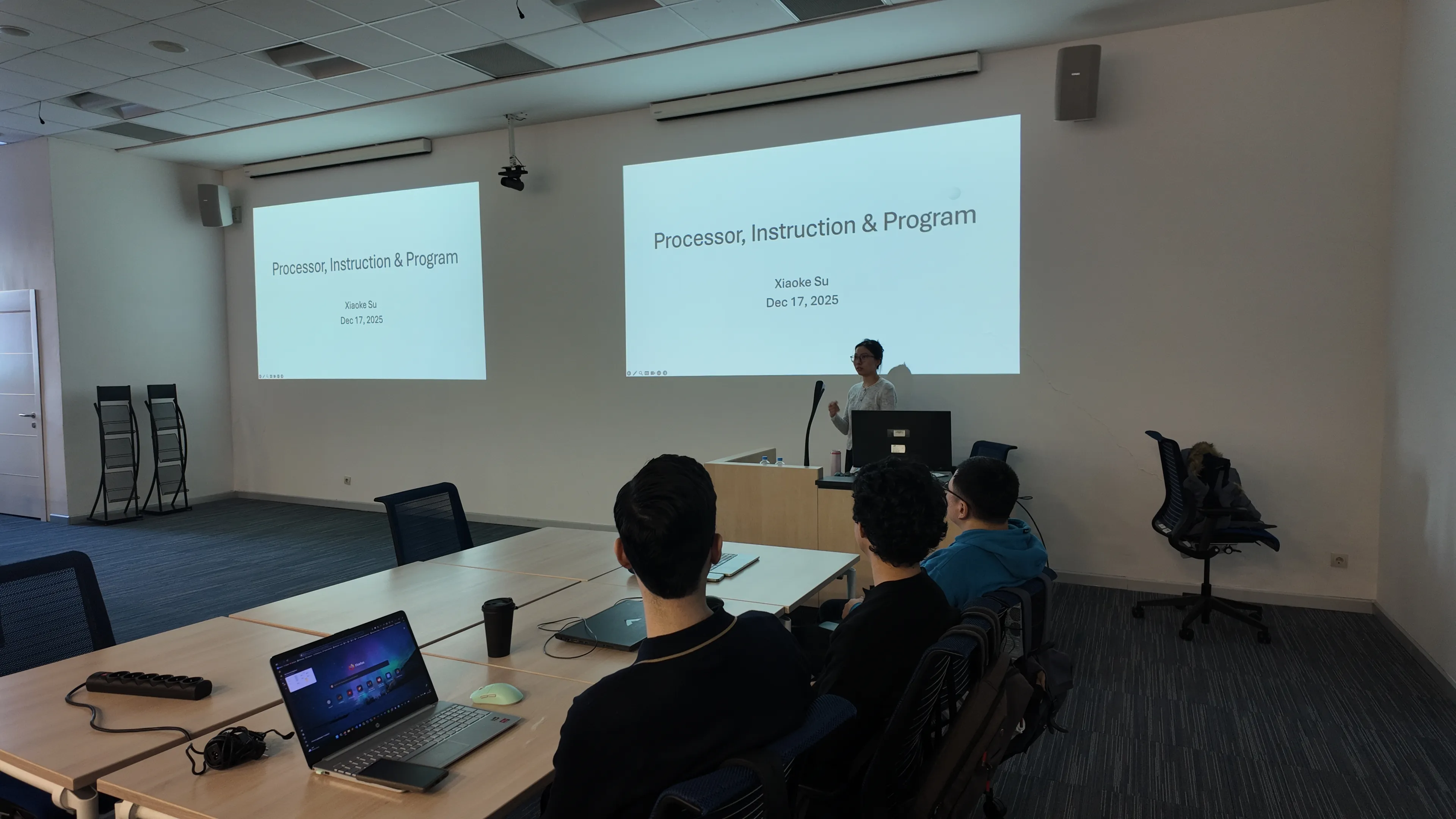
Project engineer Xiaoke Su teached
To dynamically adjust the teaching pace based on student progress, we ensured enough self‑study time while continuously tracking each individual’s advancement. We not only provided new tasks promptly to those who were ahead but also paid close attention to those who were slower, proactively checking in and answering questions. During those two weeks, everyone shared the same mindset: within the limited time, spare no effort and give it our all.
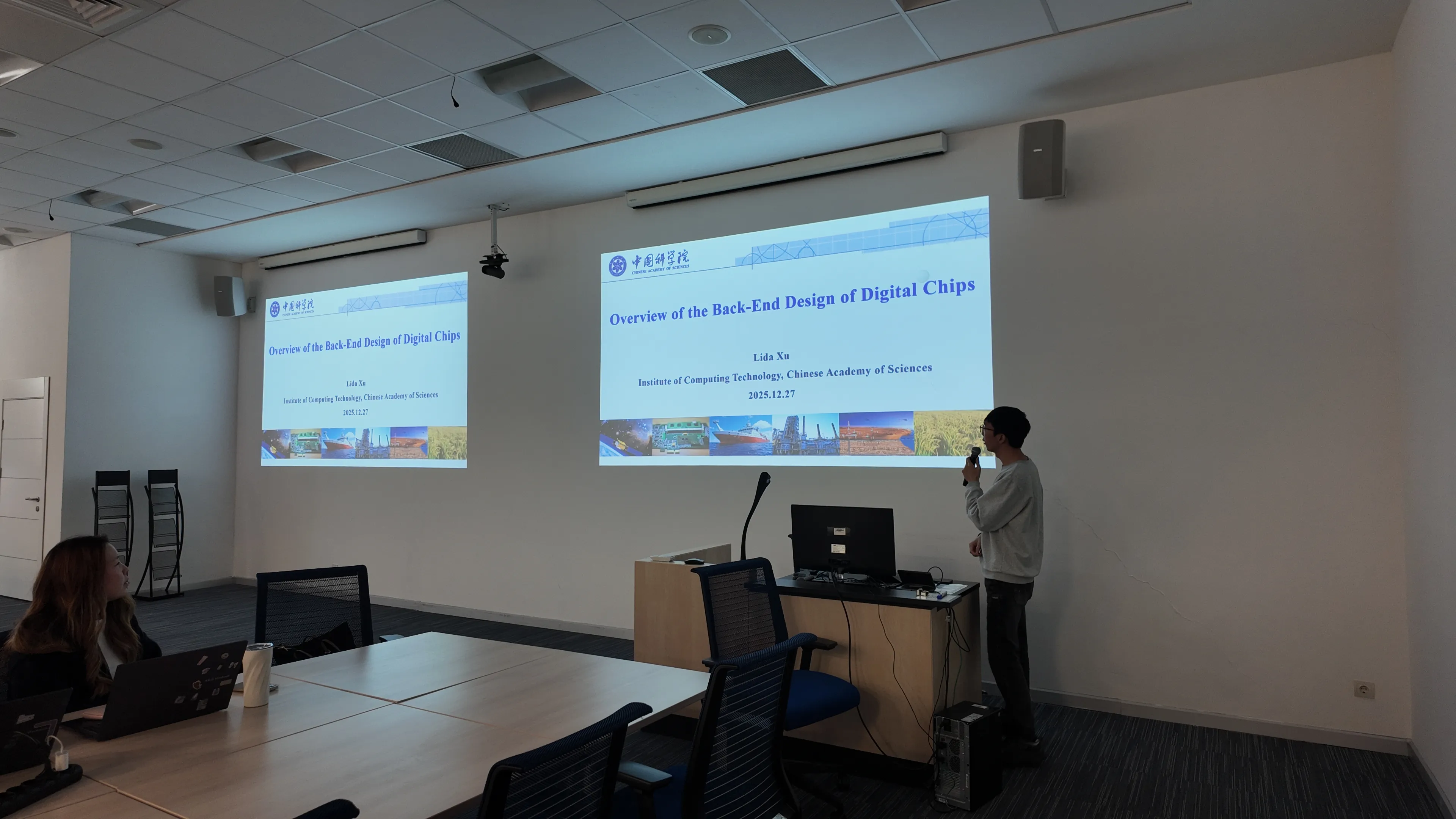
Project engineer Lida Xu teached
Chapter 3: To Be Continued
At the end of the bootcamp, we collected anonymous feedback from the participants. Many of their suggestions aligned well with our own reflections. Even at the very last moment before closing, everyone was still racing against time to debug code. However, the end of the bootcamp was not the end of learning. We told the participants that the project team would continue to provide online Q&A, and that there would be no final submission deadline for tapeout code. For those wishing to go further, we also welcome them to continue learning at any time through the open‑access lecture materials on the "One Student One Chip" official website (ysyx.org/en).
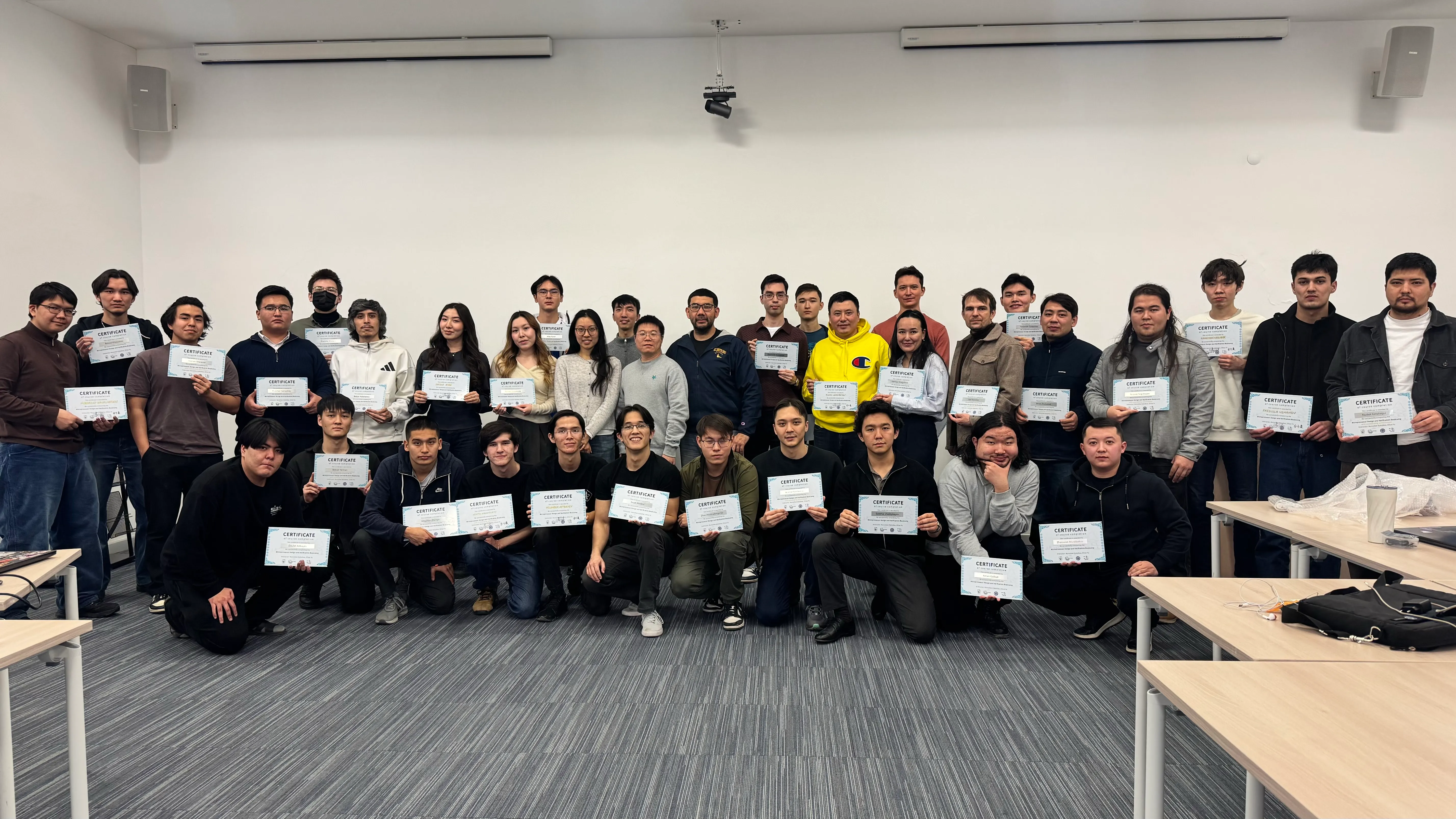
Group photo at the conclusion of the bootcamp
This was a brand‑new beginning. We look forward to more participants from around the world starting their journey here—learning about chips, designing hands‑on, and ultimately falling in love with the process of creating chips. We have always believed that the open‑source and open principles upheld by "One Student One Chip" will lead this path to farther and broader horizons.
Through 14 days of hard work, despite the snow and cold, we at least took the first step together.
We look forward to hearing more good news from Kazakhstan this year.