A Journey to Zurich: An International Classroom on Open-Source Chips
In February, the chill still lingered in Switzerland, but the exchange of ideas was already heating up. Members of the ECOS Team's "One Student One Chip" project traveled to Zurich, Switzerland, to participate in the EFCL Winter School 2026, learning about cutting-edge computing systems and open-source chip technologies alongside young scholars from around the world (mainly Europe).
This was an international classroom bringing together architecture, algorithms, tools, and hardware implementation, and also a journey to bring China's open-source chip achievements to the world.

View of Zurich
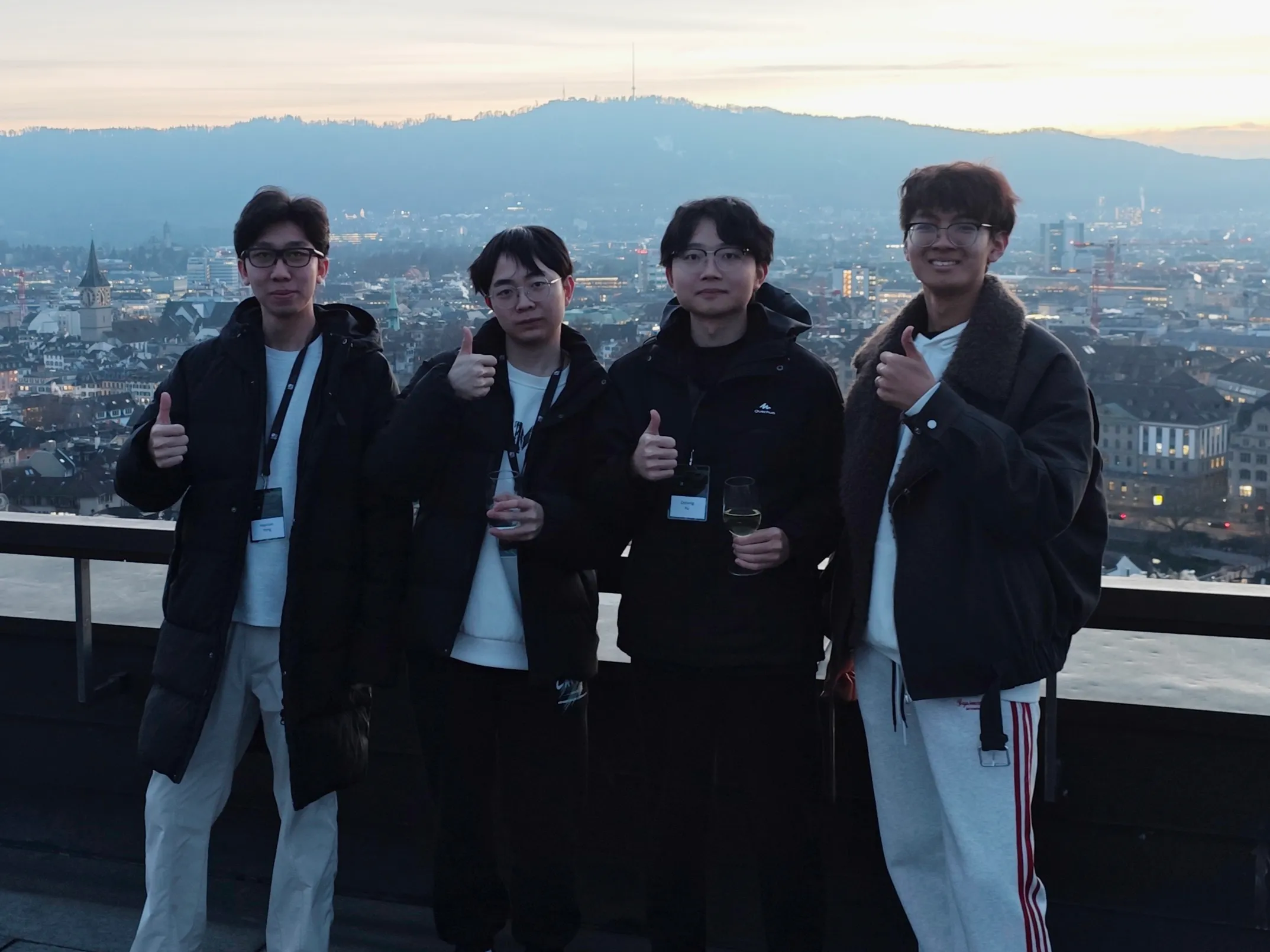
Team members group photo
PART 01 Focusing on the Frontier: From Computing Architecture to Hardware Security
On the first day of the school, multiple keynote presentations explored core issues of contemporary computing systems from different dimensions: how to continue improving computing power under energy efficiency constraints, how to bring embedded systems closer to natural intelligence, how to keep hardware secure and trustworthy in the post-quantum era, and how to break through the performance bottlenecks caused by memory limitations.
From domain-specific platforms to neuromorphic computing, from human behavior modeling to in-memory computing paradigms, the presentations covered chip design, system architecture, and AI applications, outlining the future direction of computing systems.
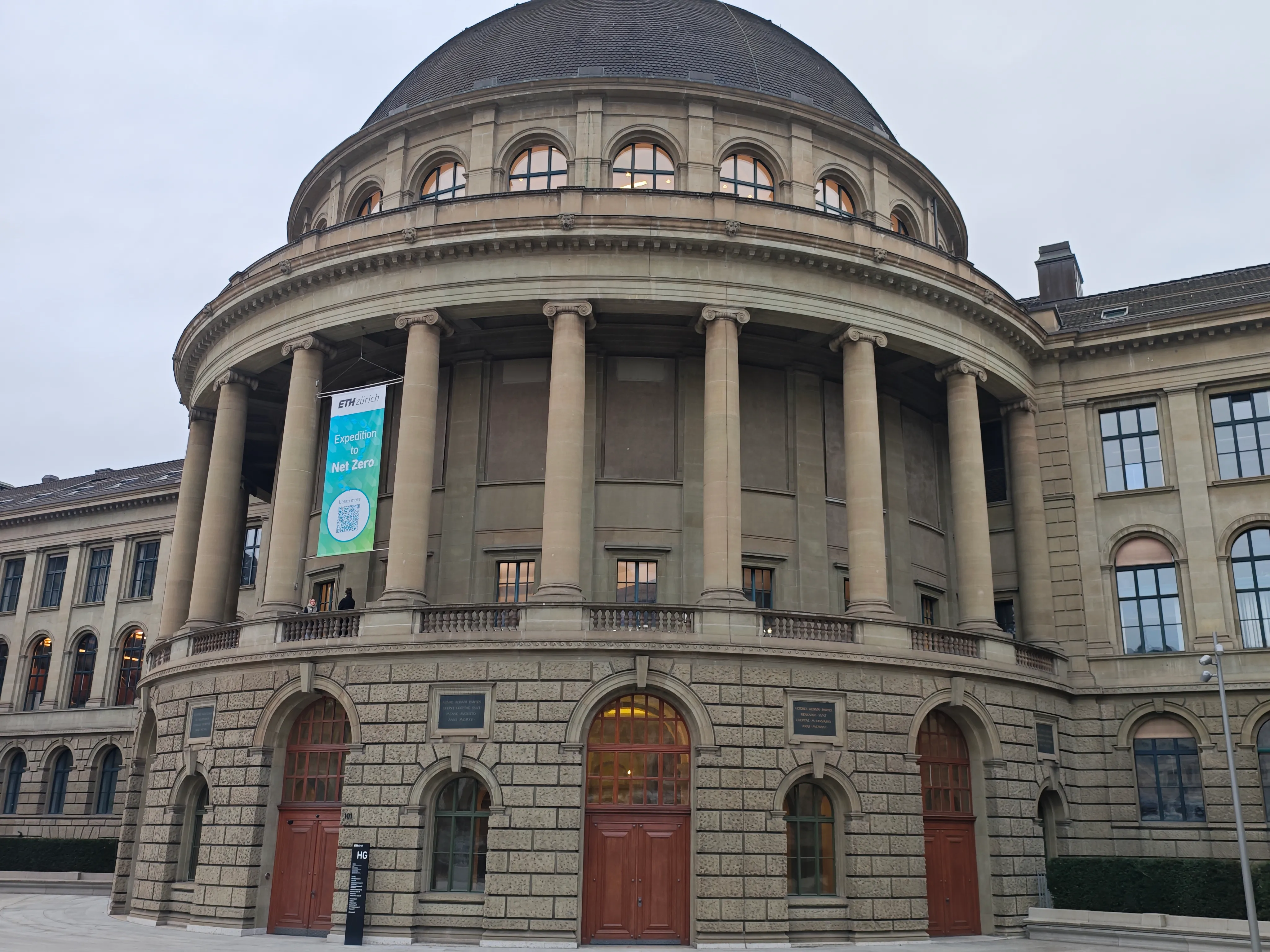
ETH main building exterior
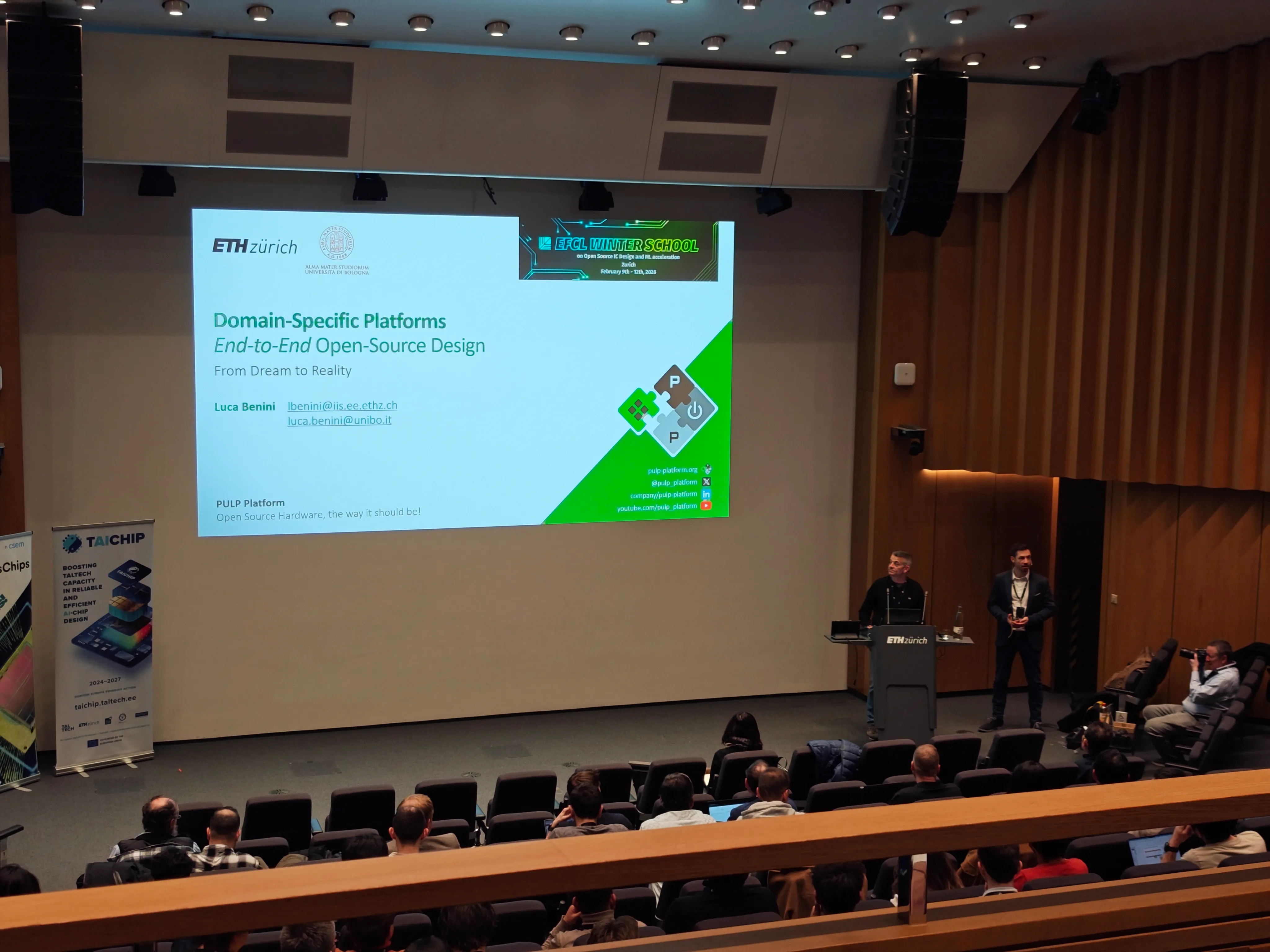
Presentation session
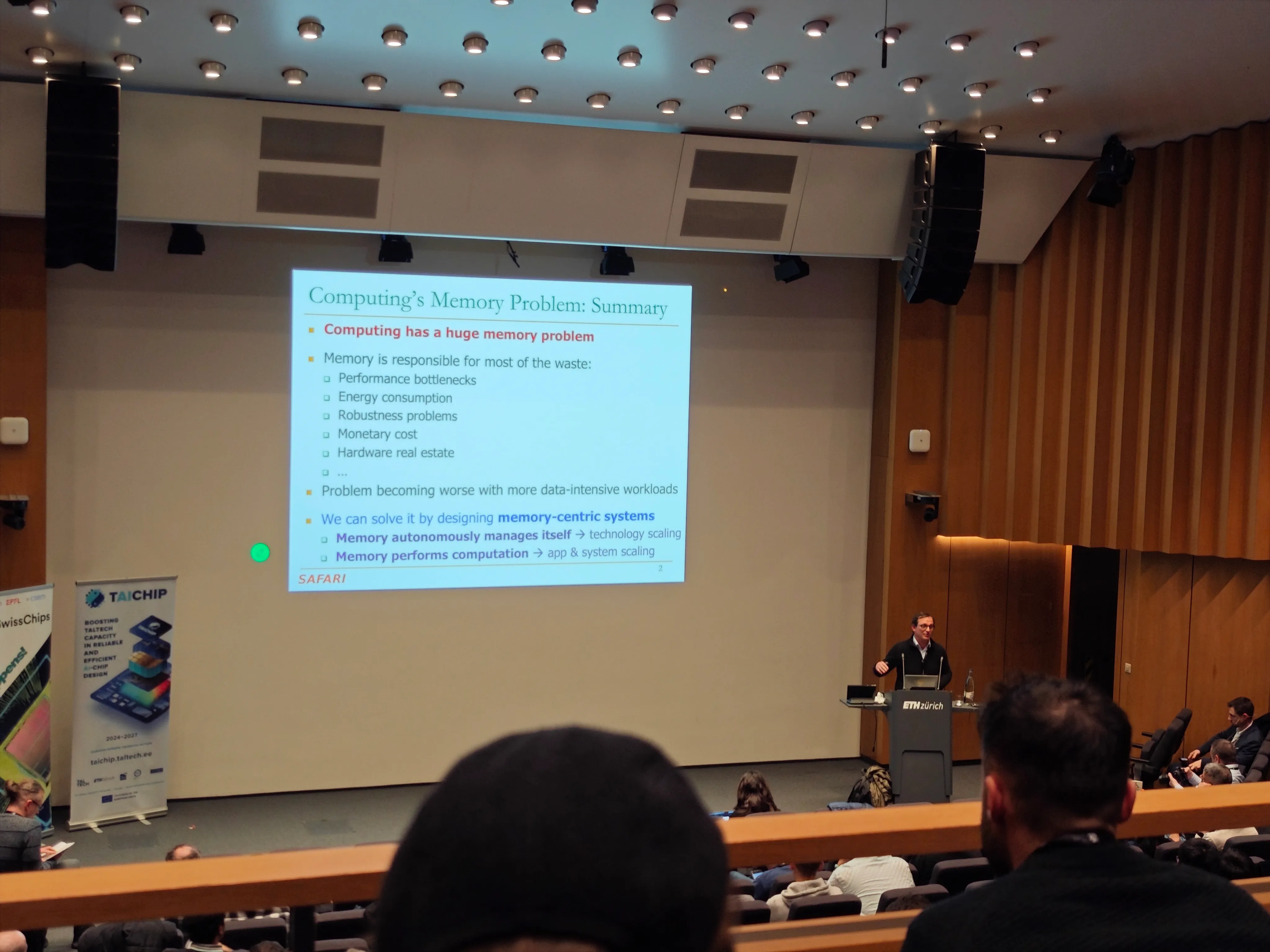
Presentation session
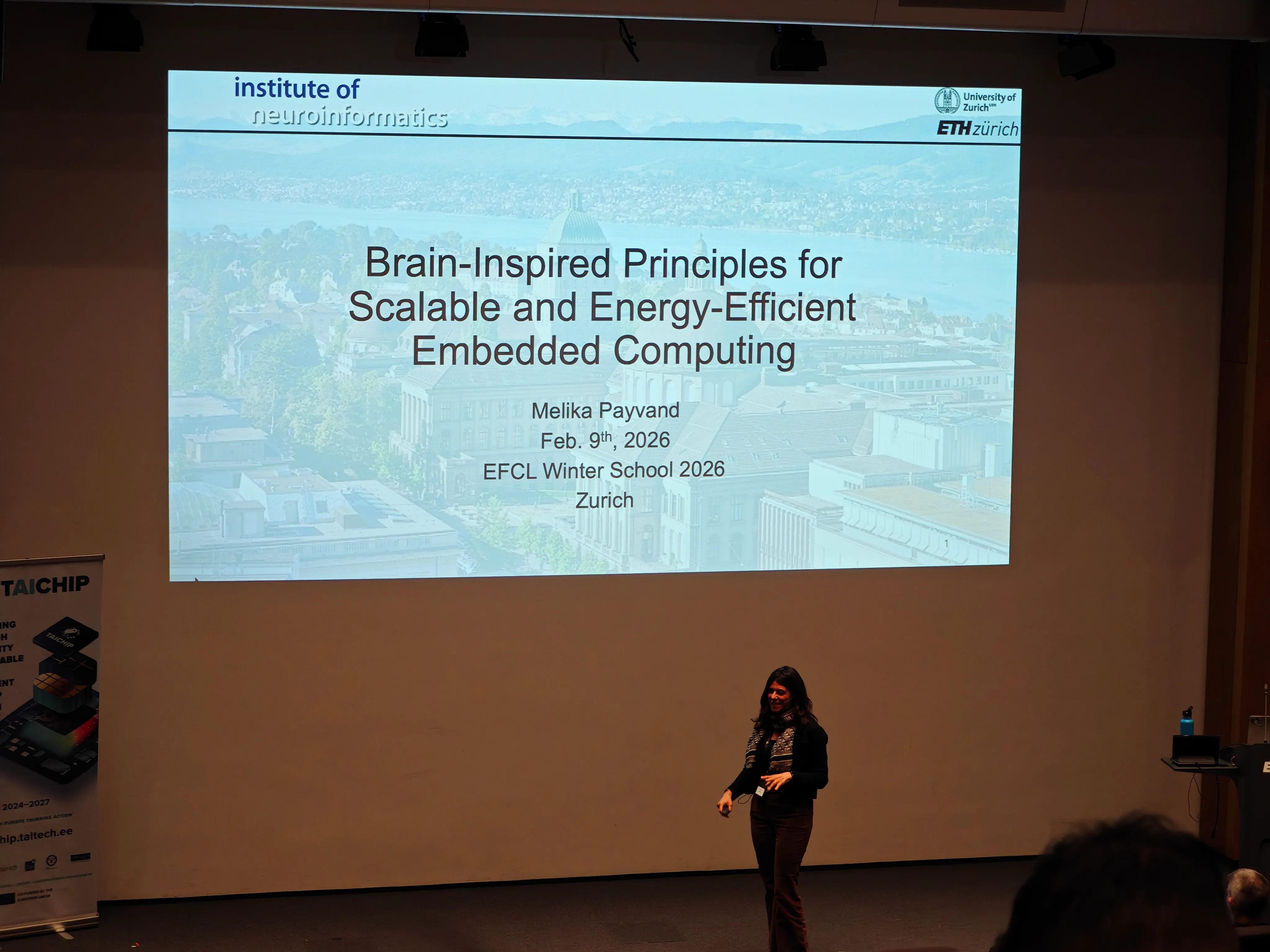
Presentation session
PART 02 Hands-on Practice: Completing the Entire Chip Design Flow
The Winter School offered two practical tracks, and our team members participated in both:
Track 1 focused on open-source digital IC design, using open-source EDA tools and process libraries to go through the entire process from simulation, synthesis, to PnR (place and route), experiencing the full journey from code to layout.
Track 2 was based on a RISC-V microcontroller, extending the pipeline and adding custom execution units to implement hardware acceleration for signal processing tasks, ending in deployment and verification on an FPGA board.
In just a few days, participants grasped the close relationship among "architecture – tools – implementation" through engineering workflows, and also gained a direct appreciation of the maturity and potential of open-source design ecosystems.
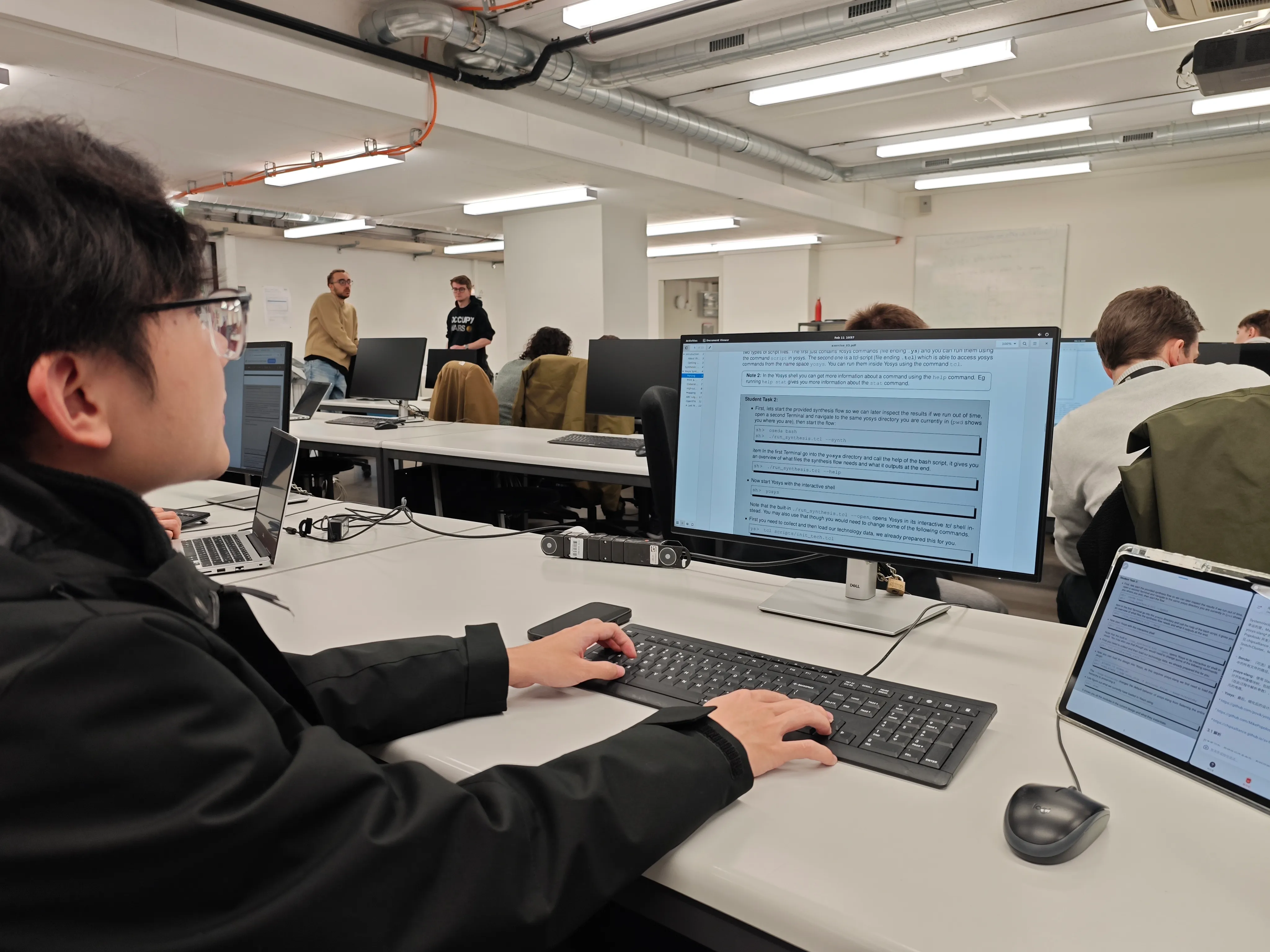
Hands-on lab session
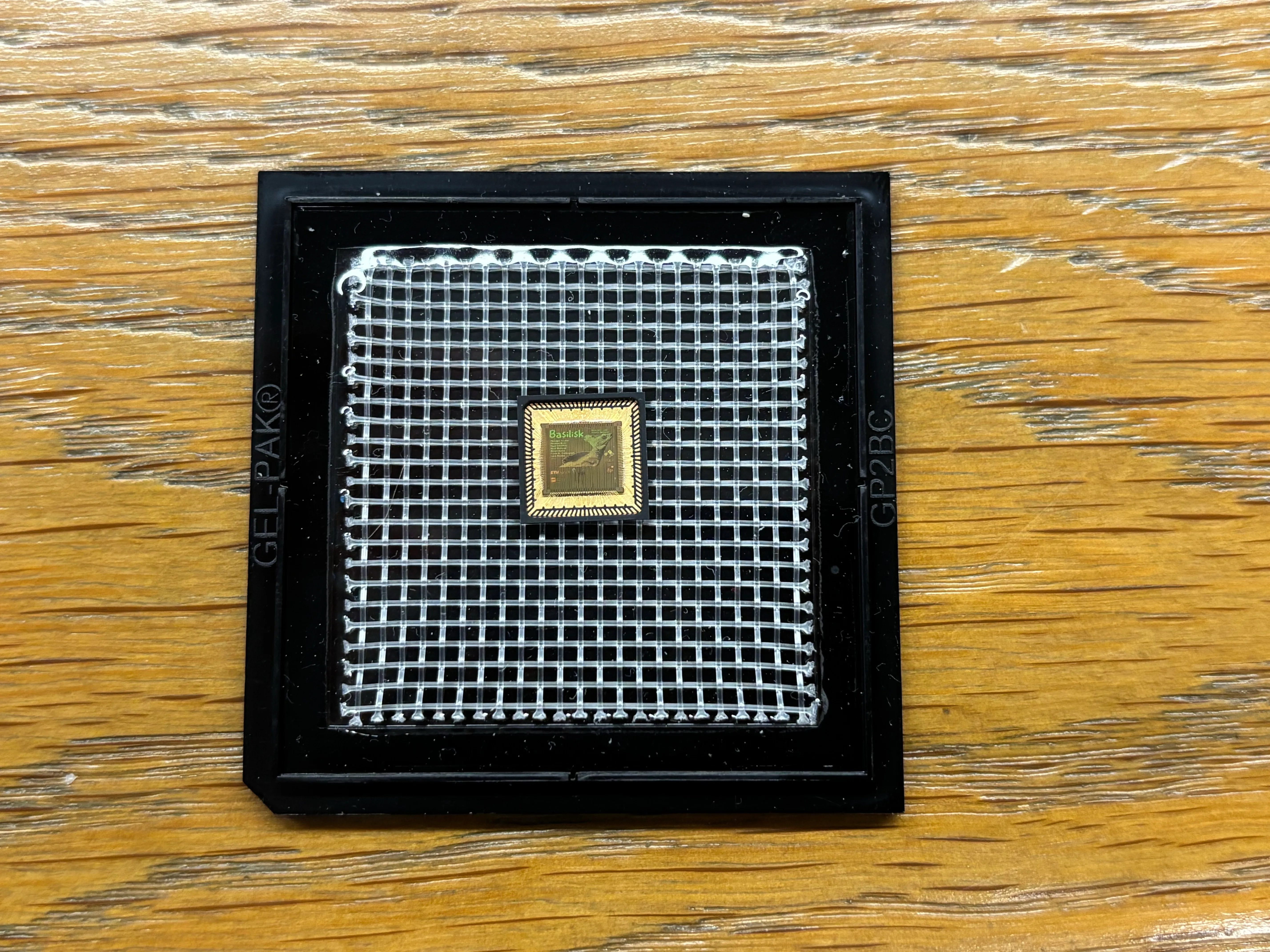
Physical chip
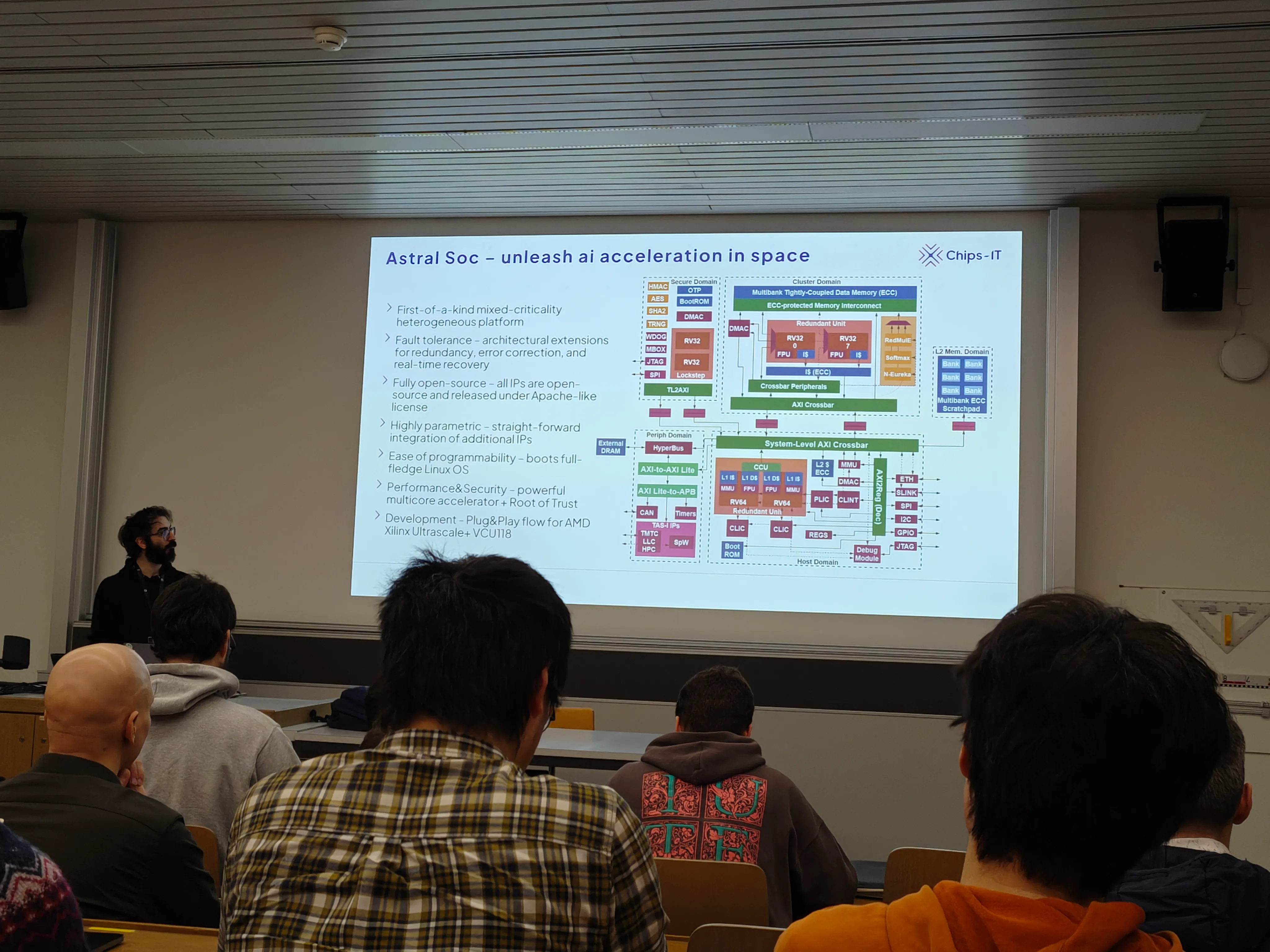
Guidance session
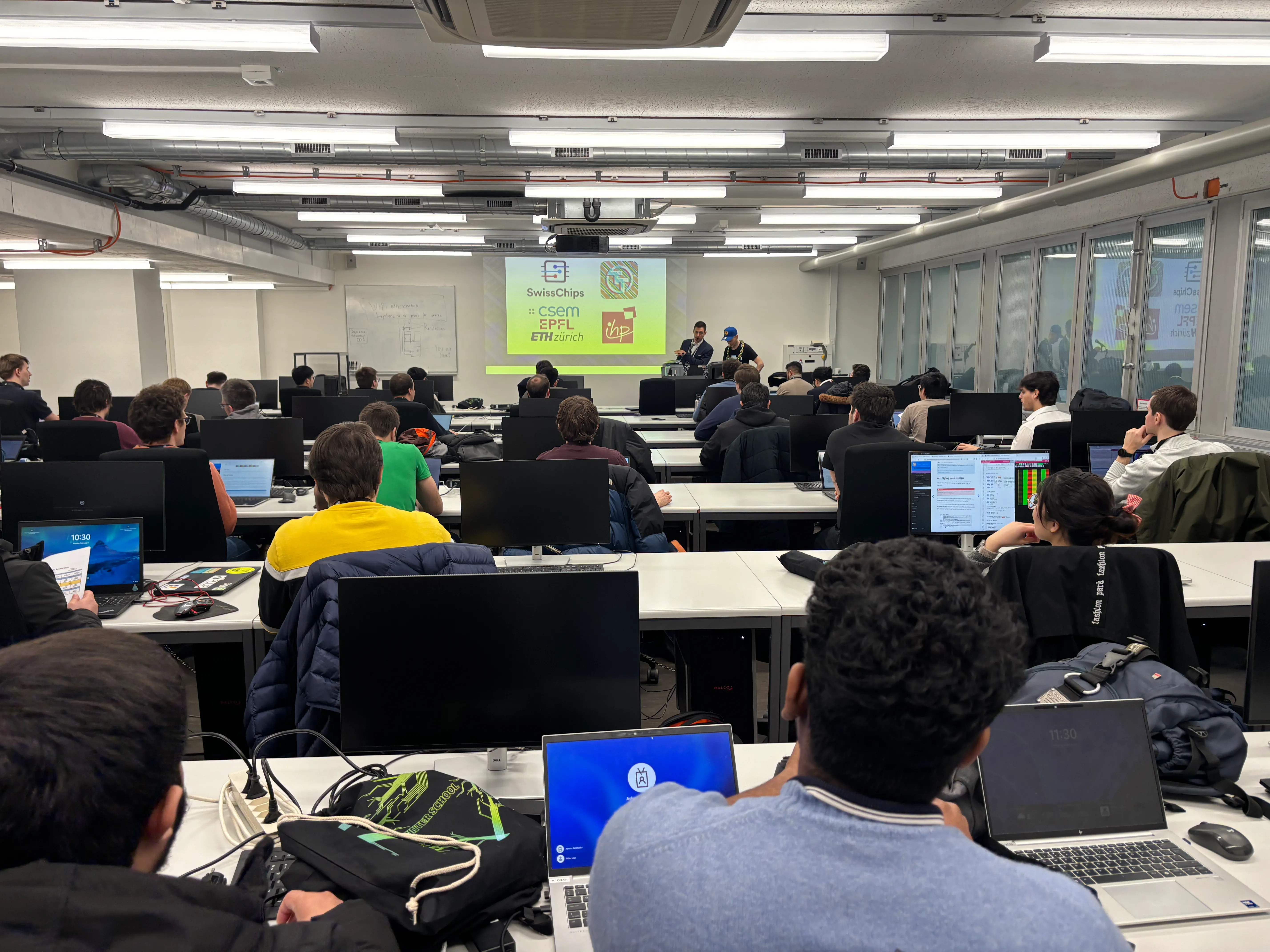
Guidance session
PART 03 Coffee Break Conversations: Real Dialogue on Open Source
Beyond the lectures, coffee breaks became an important window for academic discussion. Team members engaged in in-depth conversations with scholars from Switzerland, Germany, France, Croatia, and other countries on open-source chip development, educational models, and engineering practices.
When foreign scholars learned that all team members were undergraduate students, they expressed surprise. In Europe, undergraduate education is mostly general in nature, with less exposure to real engineering projects. Taking the opportunity, our team members systematically introduced the "One Student One Chip" non-profit teaching model and open course system, and showcased student project outcomes. "One Student One Chip" enables students to enter real chip engineering training at an early stage—a path that sparked interest among the international scholars. Some of them immediately searched for the program online and expressed continued interest in this open-source chip teaching practice from China.
This trip brought "One Student One Chip" from domestic classrooms to an international audience, and let the world see the genuine exploration in open-source hardware education by a Chinese team.
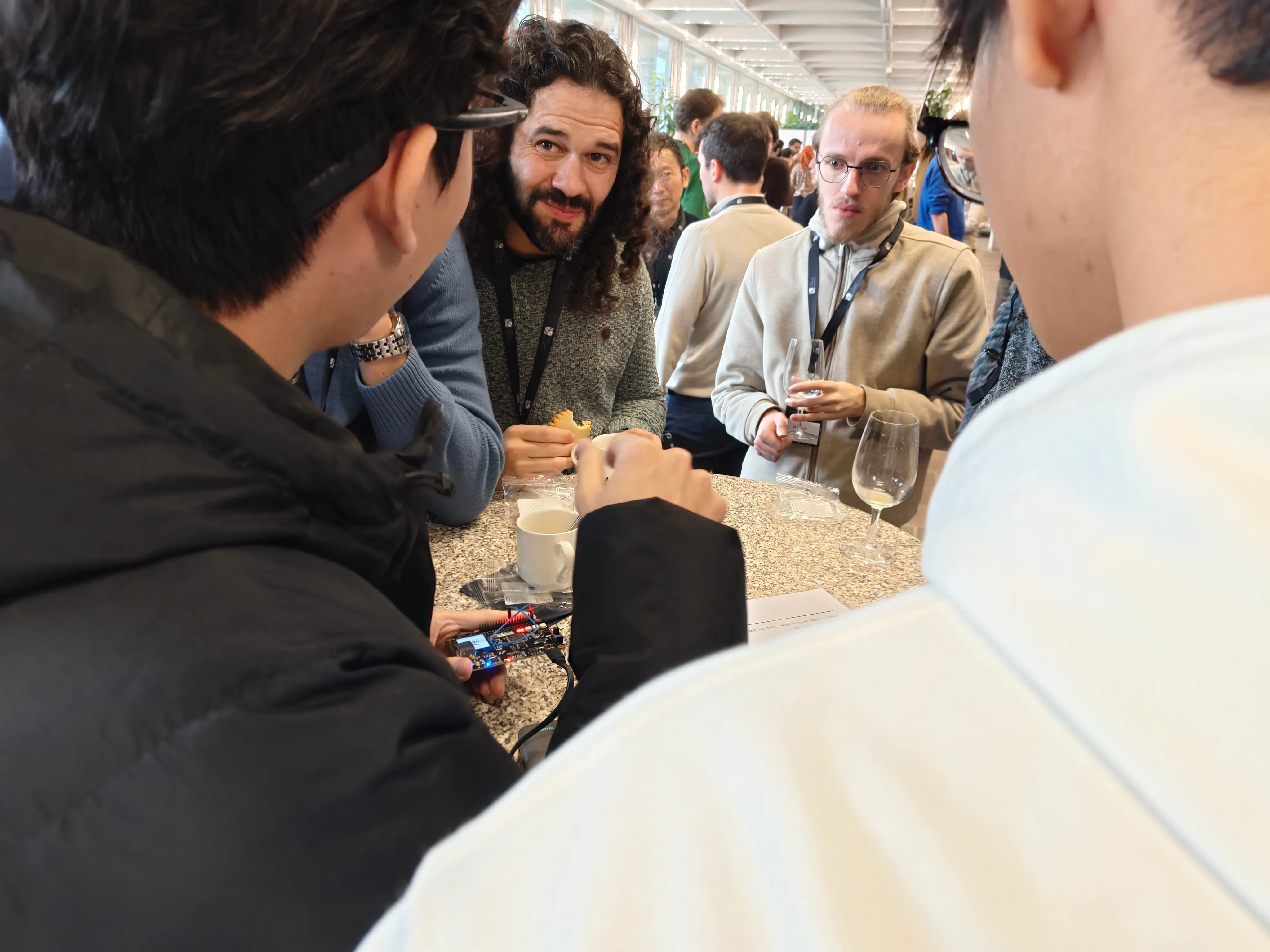
Coffee break conversation
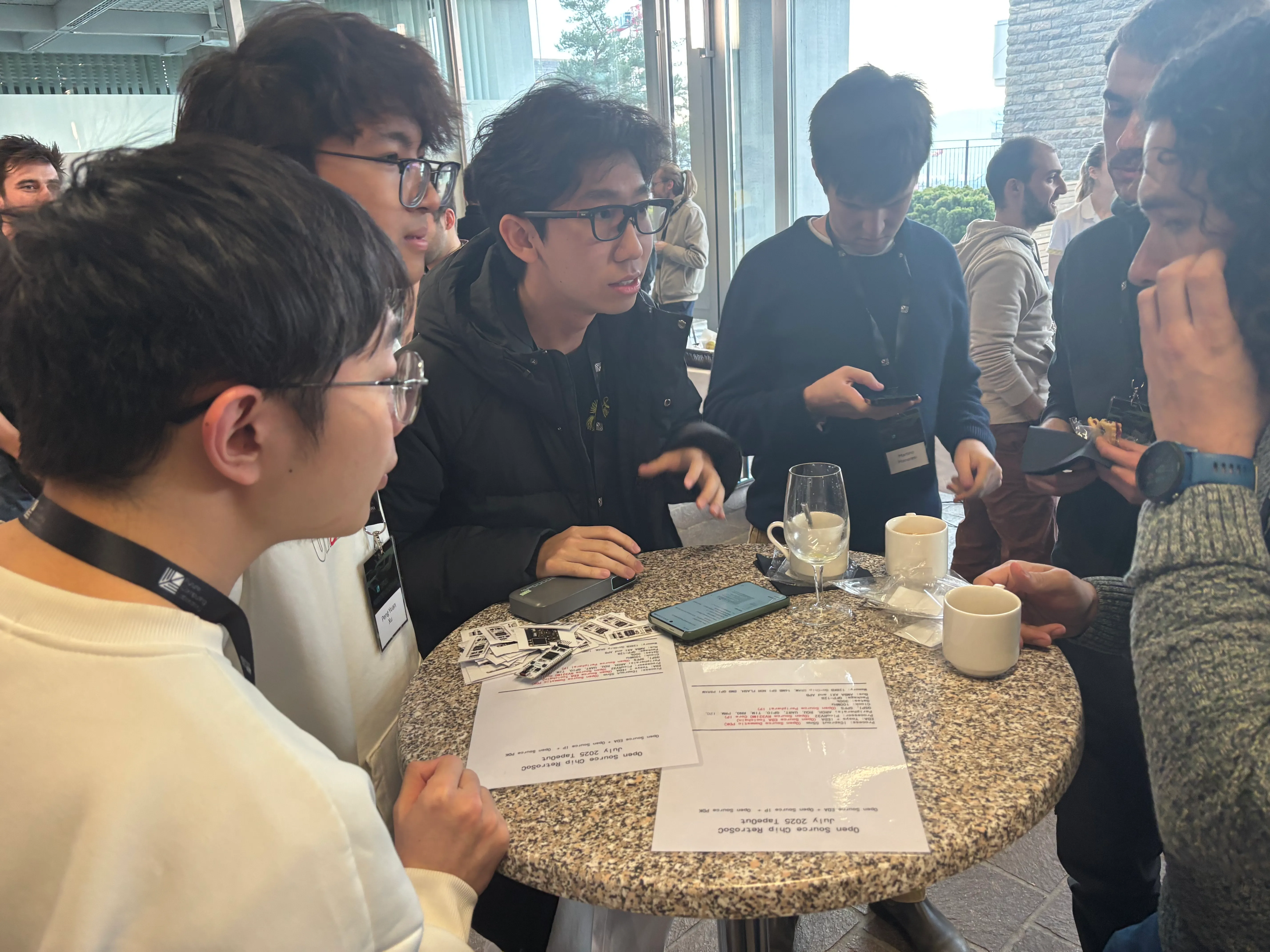
Coffee break conversation
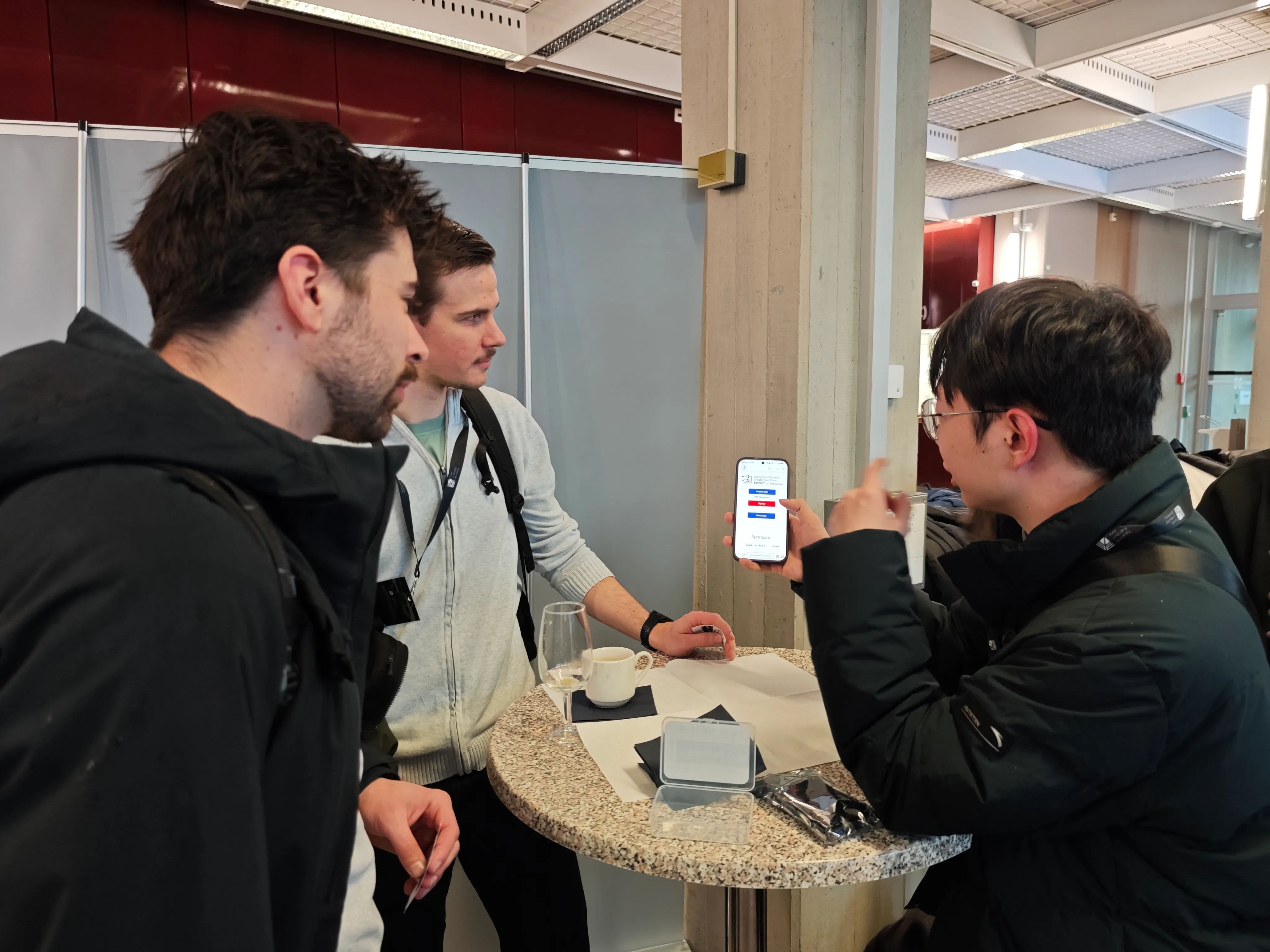
"One Student One Chip" website showcase
PART 04 Outcome Showcase: ECOS Team's Full Open-Source Chip Flow Practice
For this trip, team members brought the latest batch of Starry-Sky boards, built on a full open-source toolchain and open-source PDK. Through live demonstrations and explanations, we presented the overall design approach from toolchain, process, to IP, and invited more people to join the open-source community.
The response was enthusiastic, drawing a crowd of foreign scholars. After the event, some scholars remained in contact with us, requesting a board for their own research validation.
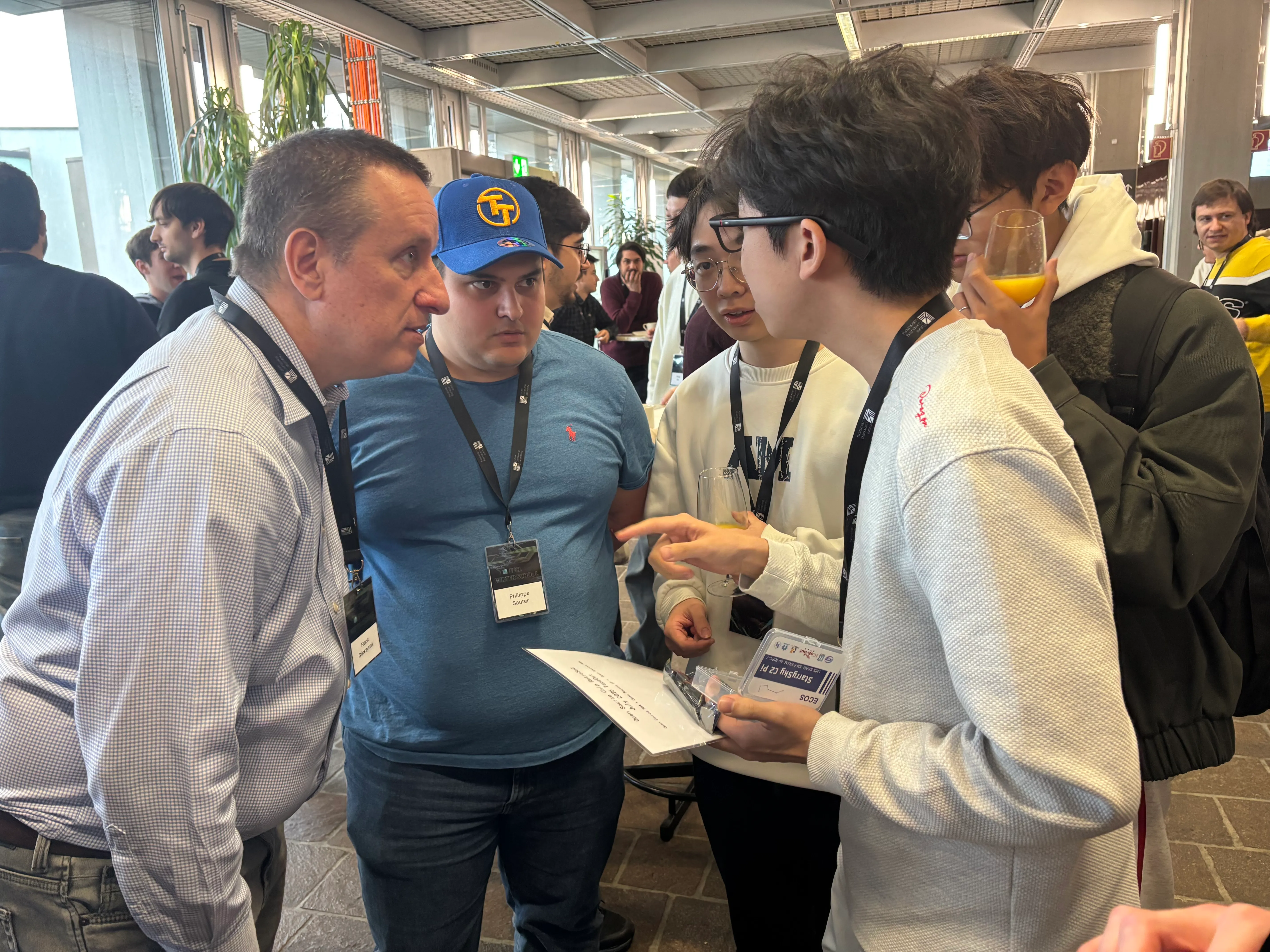
Coffee break conversation
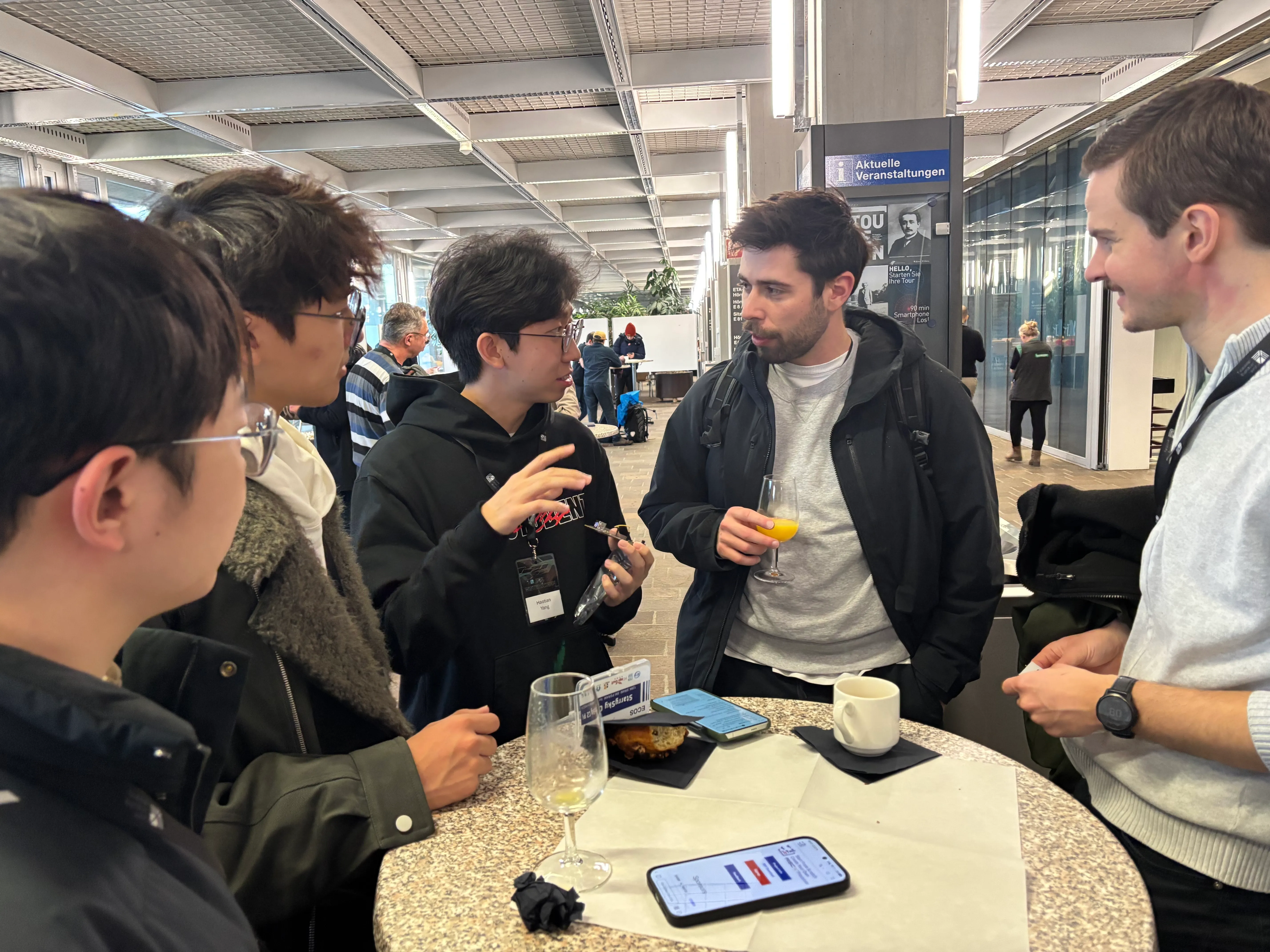
Coffee break conversation
PART 05 Board Gifting: Connecting the Open-Source Spirit
At the end of the course, our team gifted Starry-Sky boards to the PULP team and the Tiny Tapeout team. This was not just a sharing of technical outcomes, but also a continuation of the open-source spirit—teams from different countries, exchanging ideas and progressing together on the same technological path.
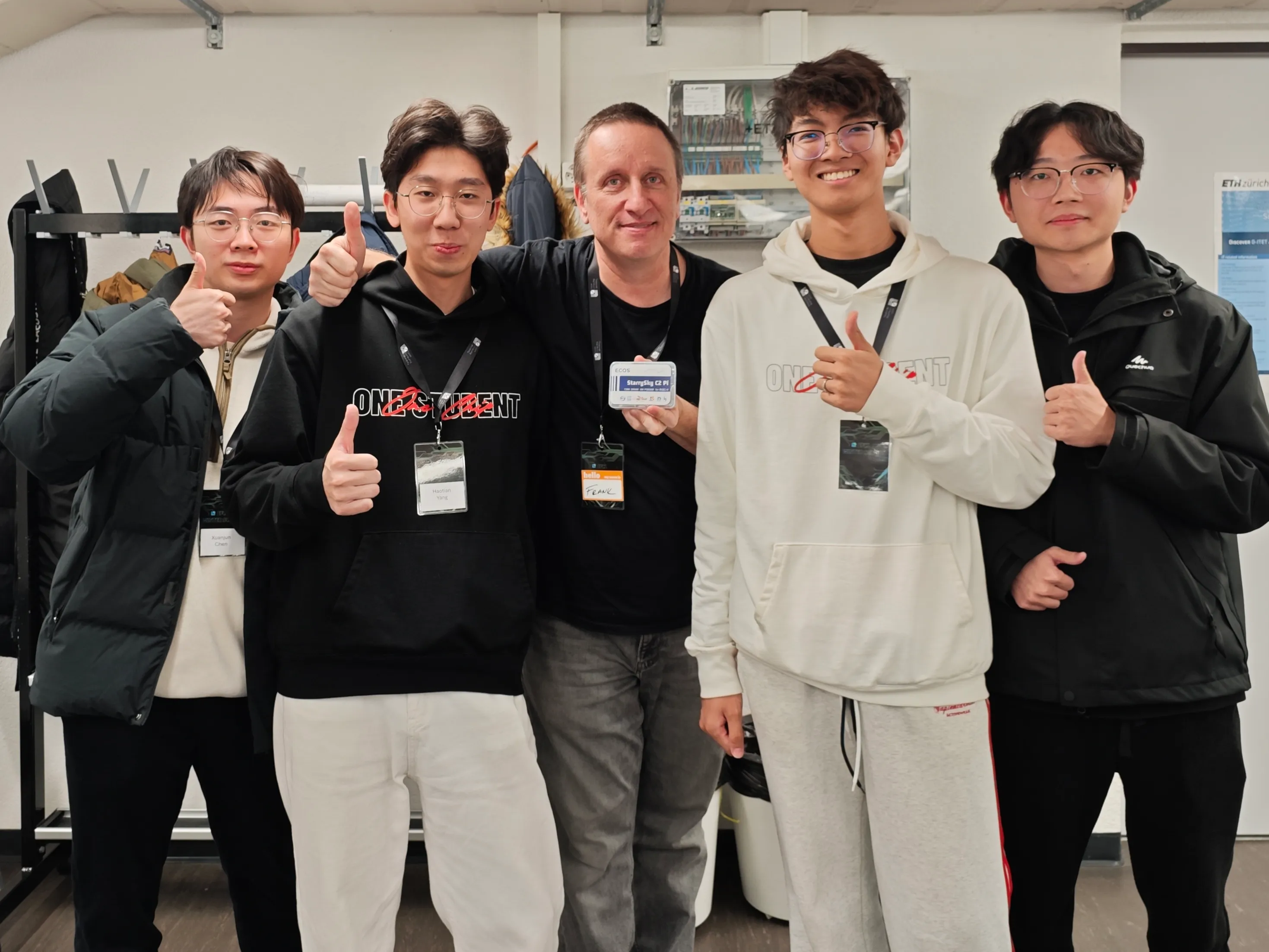
Group photo after board gifting (PULP)
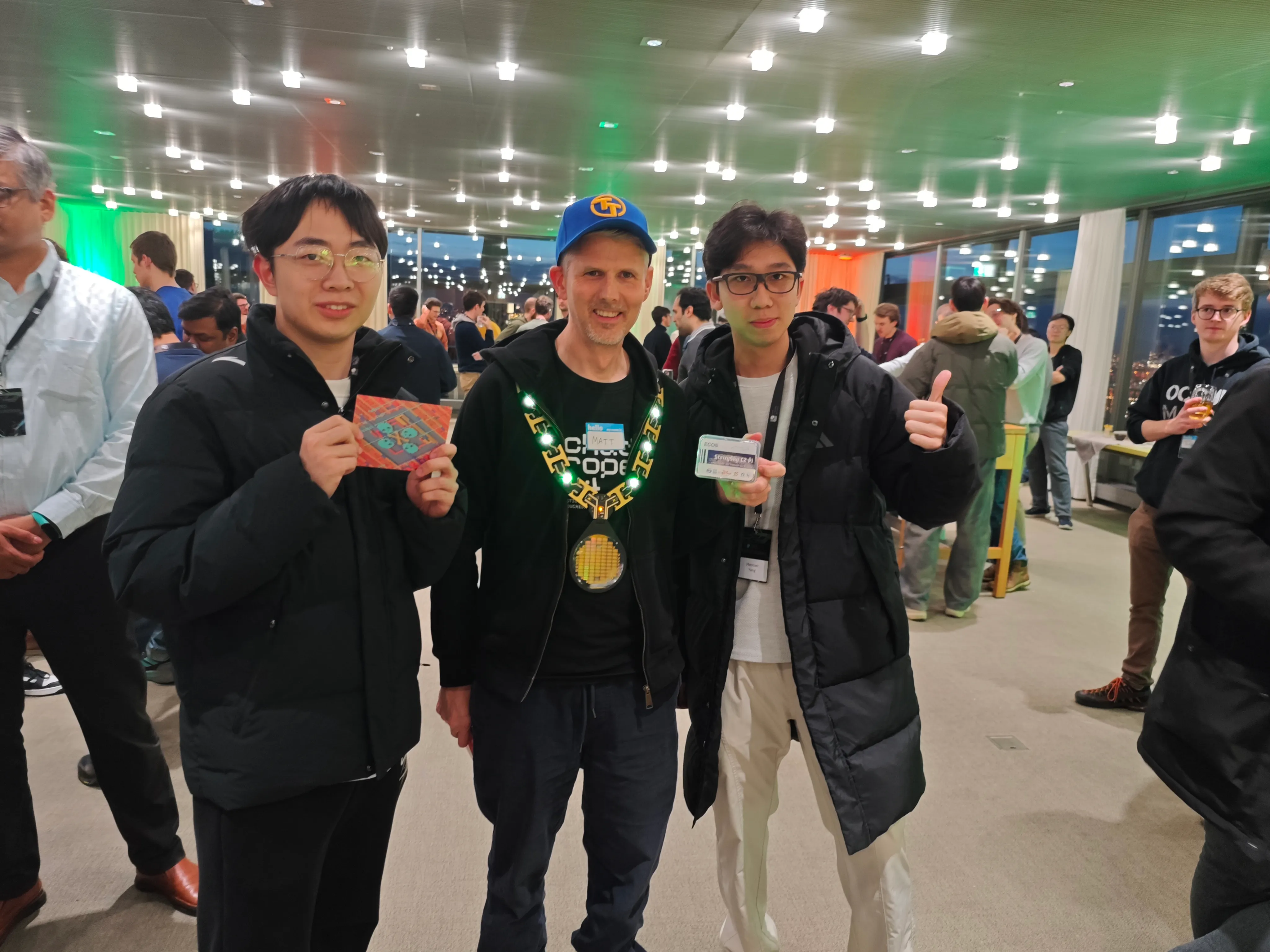
Group photo after board gifting (Tiny Tapeout)
PART 06 Conclusion: Pack Up and Move Forward
In just one week—from lectures to labs, from keyboards to circuit boards, from China to Europe—we completed a genuine experience of open-source chips.
This was not only a learning journey but also a path validation: when tools are open, knowledge is shared, and practice is accessible, chips are no longer just an industry barrier—they can also be a starting point for education.
From "One Student One Chip" to Zurich, this path continues to extend. In the future, we will carry more achievements and continue to reach out into the wider open-source world.
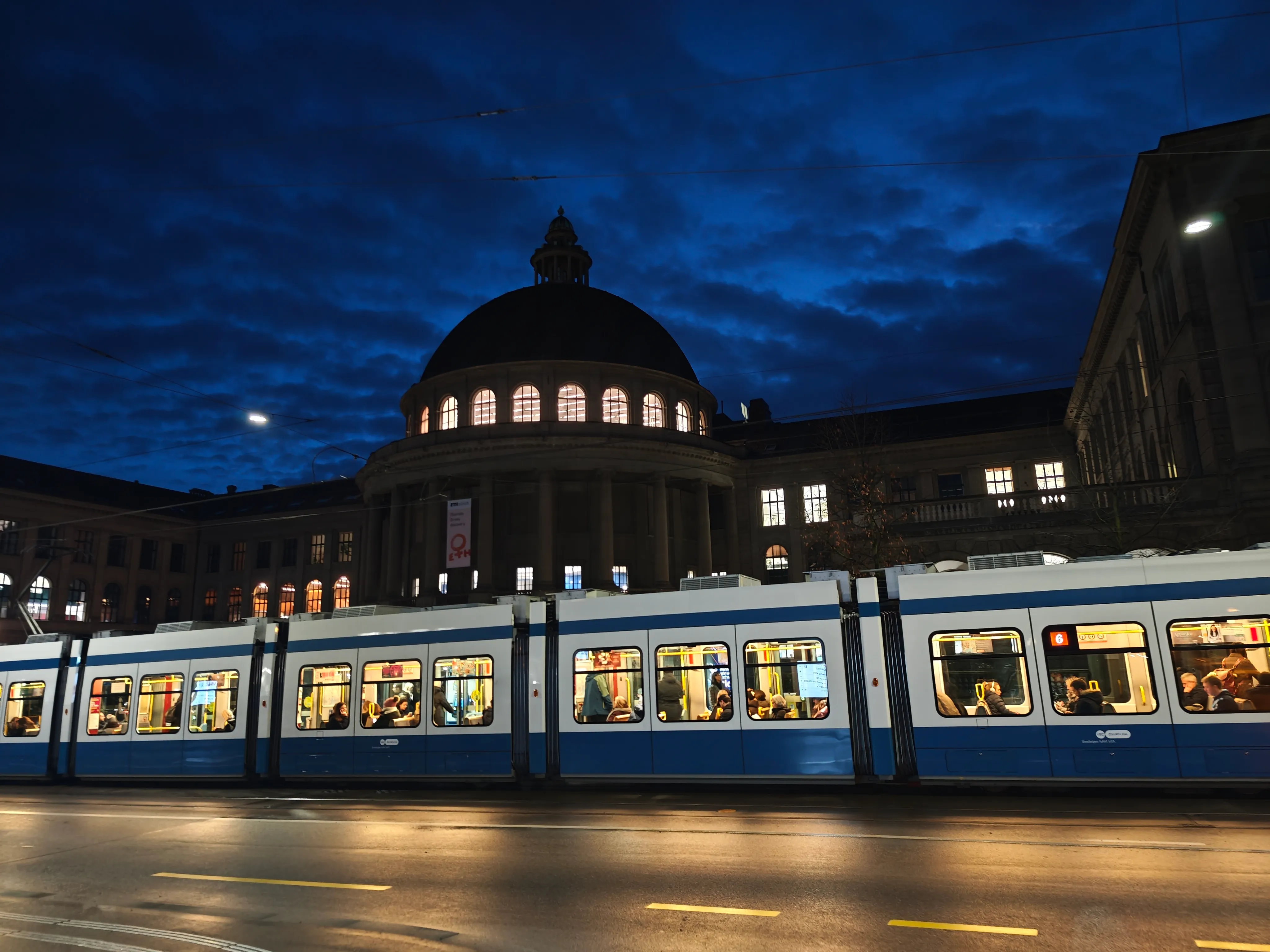
ETH main building at night

Zurich night view