"One Student One Chip" Participates in the Pakistan Semiconductor Summit
From March 27 to 29, 2026, the "One Student One Chip" team traveled to Lahore to participate in the 2nd Pakistan Semiconductor Summit. This marked the first time "One Student One Chip" had engaged with South Asia, and we were honored to be the only foreign team present at the event. During the summit, we delivered three main presentations: a roundtable discussion by Dr. Yu Zihao, a poster showcase of the "One Student One Chip" XiaoXin Mambo Robot, and a tutorial on ECOS Studio brought by the team.
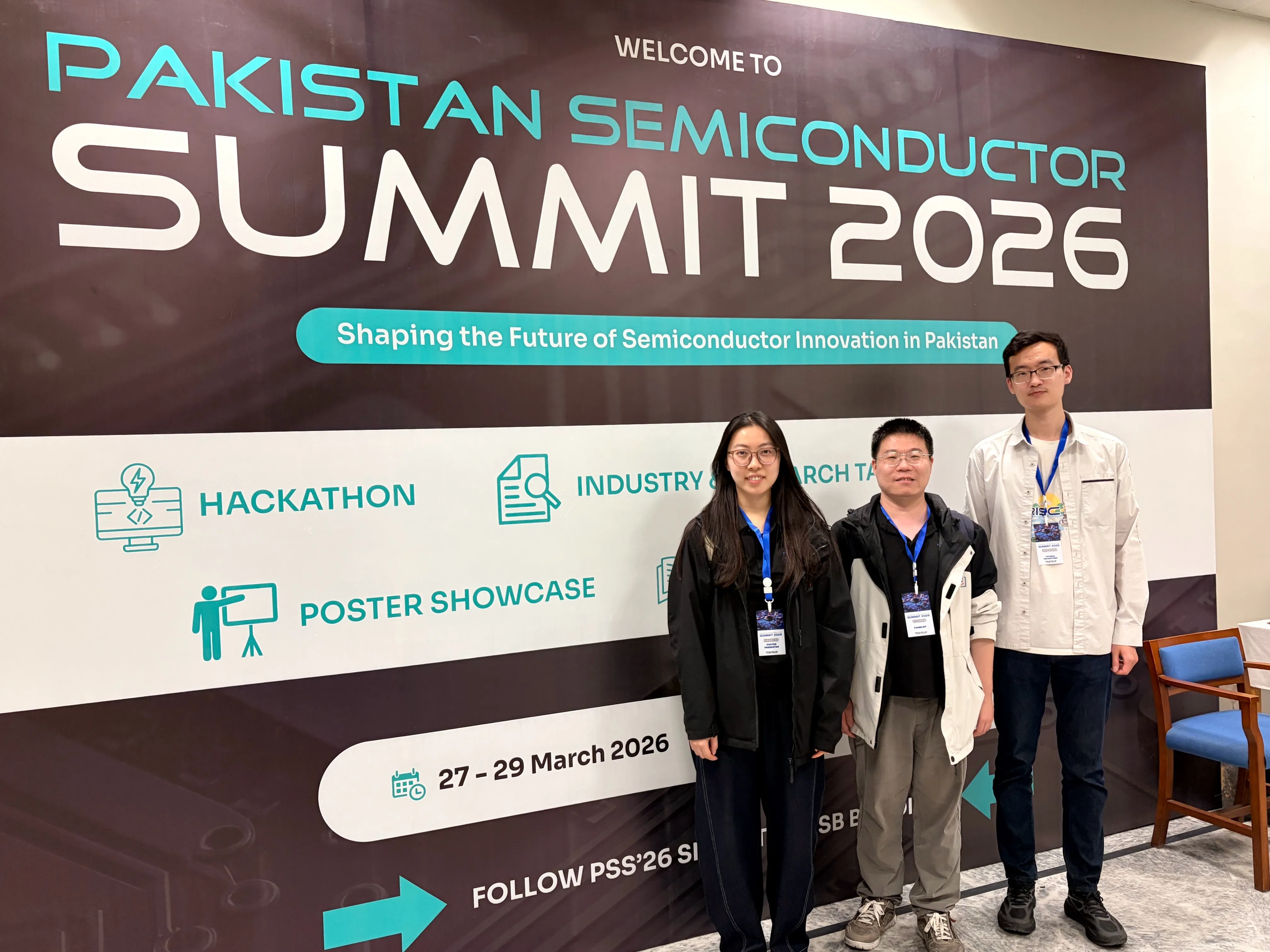
Group photo of the "One Student One Chip" team at the summit
The XiaoXin Mambo Robot is a new achievement that the "One Student One Chip" team completed initial testing on earlier this year. The robot uses the StarrySky C2-Pico open-source development board as its core controller and can be voice-activated by calling "XiaoXin" to execute commands such as moving forward, moving backward, turning left, turning right, swaying, shaking hands, lying down, standing up, and reciting the periodic table. The StarrySky C2-Pico board is powered by the team's self-developed RetroSoC chip, which was fabricated using the ICsprout 55nm open-source PDK process. It represents a fusion of open instruction set RISC-V, open-source IP, open-source EDA, and domestically developed open-source PDK. The chip integrates the classic lightweight open-source RISC-V processor core PicoRV32. In the future, "One Student One Chip" students will be able to use their own self-developed RISC-V processor cores to design their own robot creations.
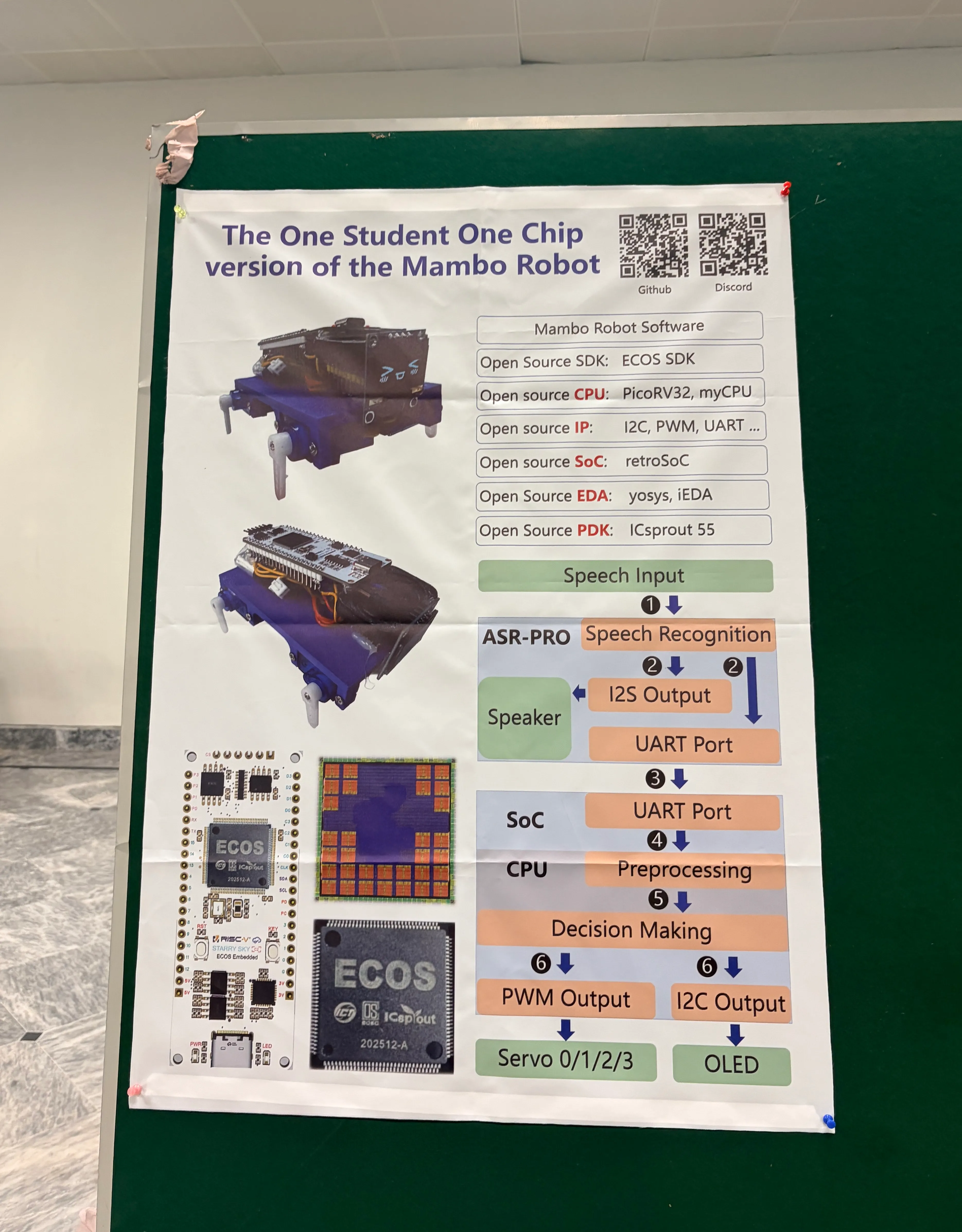
Poster presentation of the XiaoXin Mambo Robot
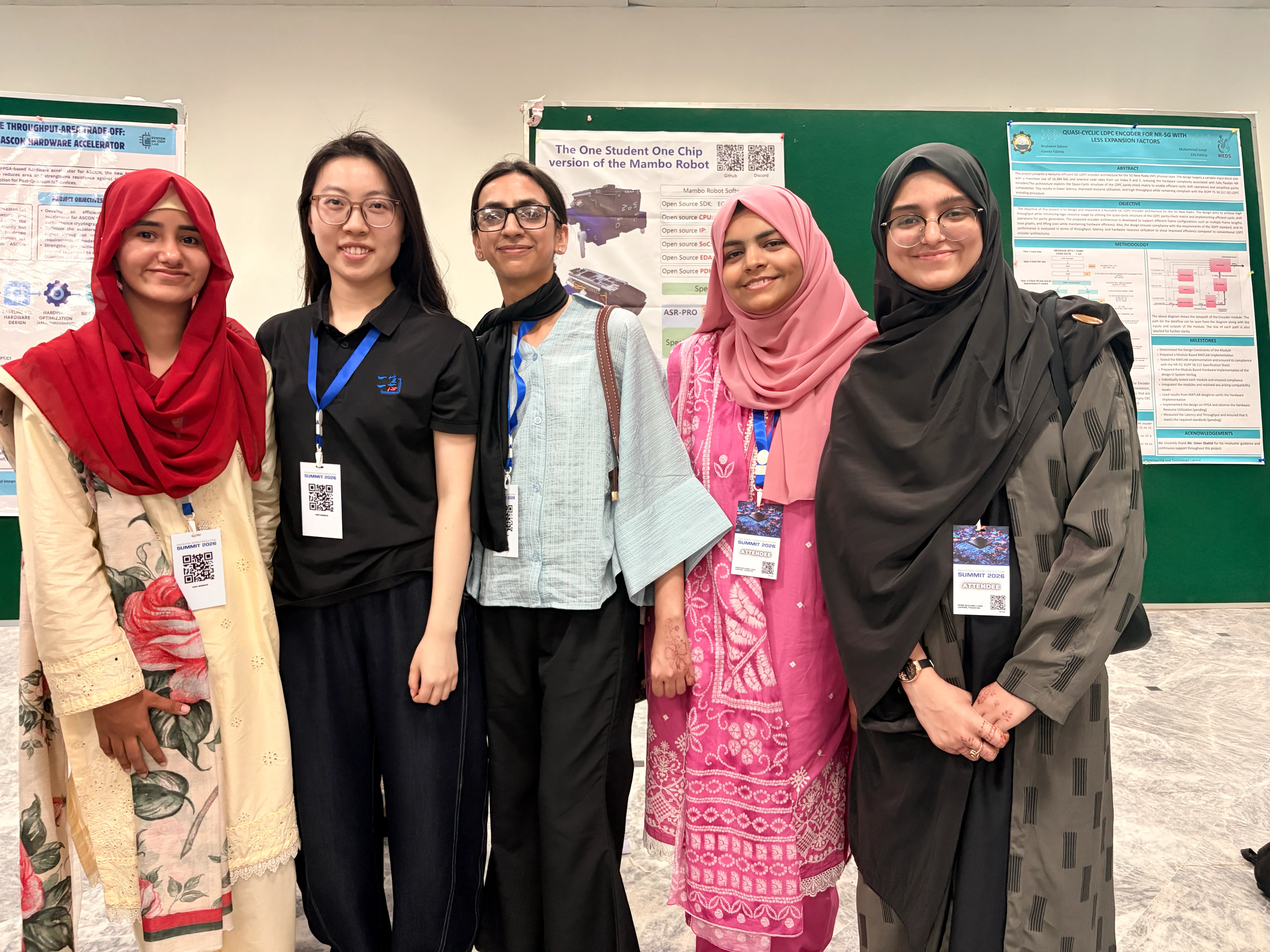
On-site exchange and group photo at the poster
The "One Student One Chip" team also delivered a tutorial on ECOS Studio at the summit. The presentation systematically introduced ECOS Studio to the audience — a fully open-source chip design solution that integrates open-source EDA, open-source IP, and open-source PDK — demonstrating how to complete the entire process from RTL code to chip layout using open-source tools. The three open-source pillars of ECOS Studio were explained: the ECC toolchain, which enables a fully automated design flow from RTL to GDSII, an open-source IP library providing pre-verified RISC-V SoC templates and general-purpose peripheral IPs, and the team-maintained ICsprout55 open-source 55nm PDK, which balances industrial-grade performance with academic tapeout costs. RetroSoC was used as a live example to showcase how this fully open-source RISC-V chip was successfully taped out using this flow and verified upon return in December 2025. The presentation also shared how ECOS Studio integrates with the "One Student One Chip" project, introducing plans to provide a platform for the open-source community and large-scale chip design education in the future. The talk showcased years of accumulated open-source achievements and the open-source chip ecosystem the team has built, marking an important milestone toward realizing a truly "open-source chip agile design full flow."
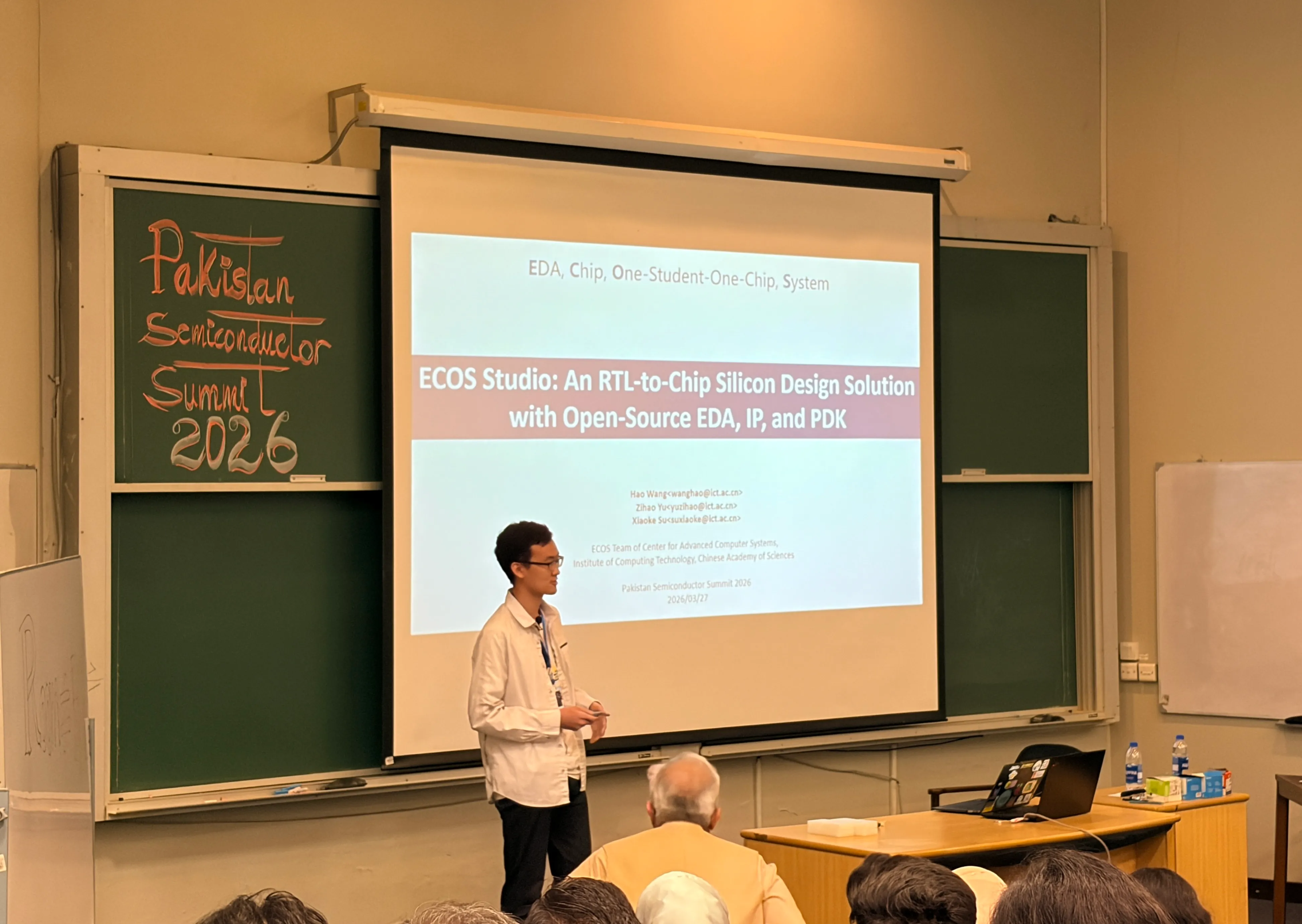
ECOS Studio tutorial in progress
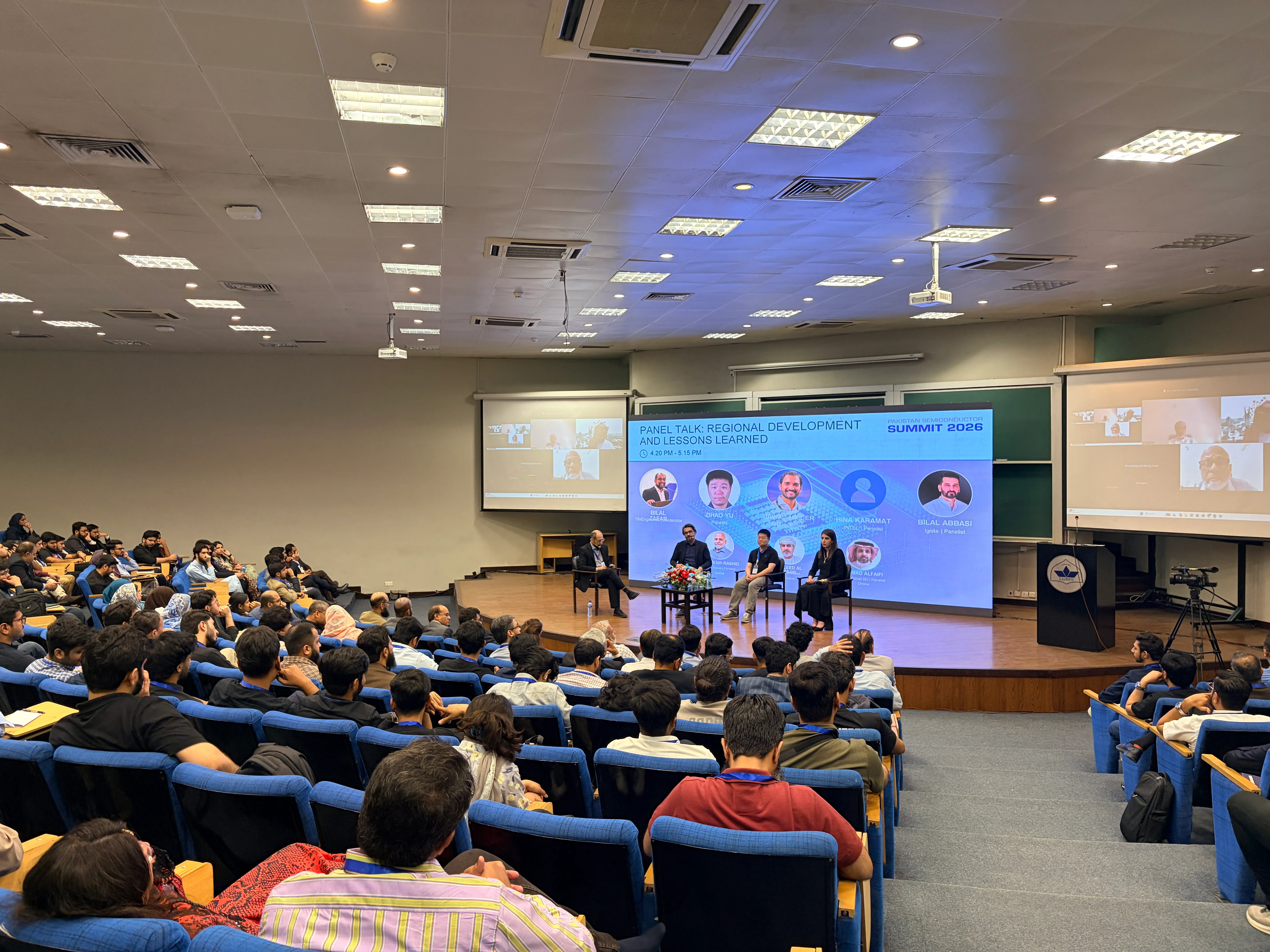
Dr. Yu Zihao at the panel discussion
Unlike previous conferences, at this event — as the only foreign team in attendance — we received a great deal of warmth and goodwill. Many participants, even those with no direct connection to our project, came over proactively to greet us and express their welcome and gratitude for our presence.
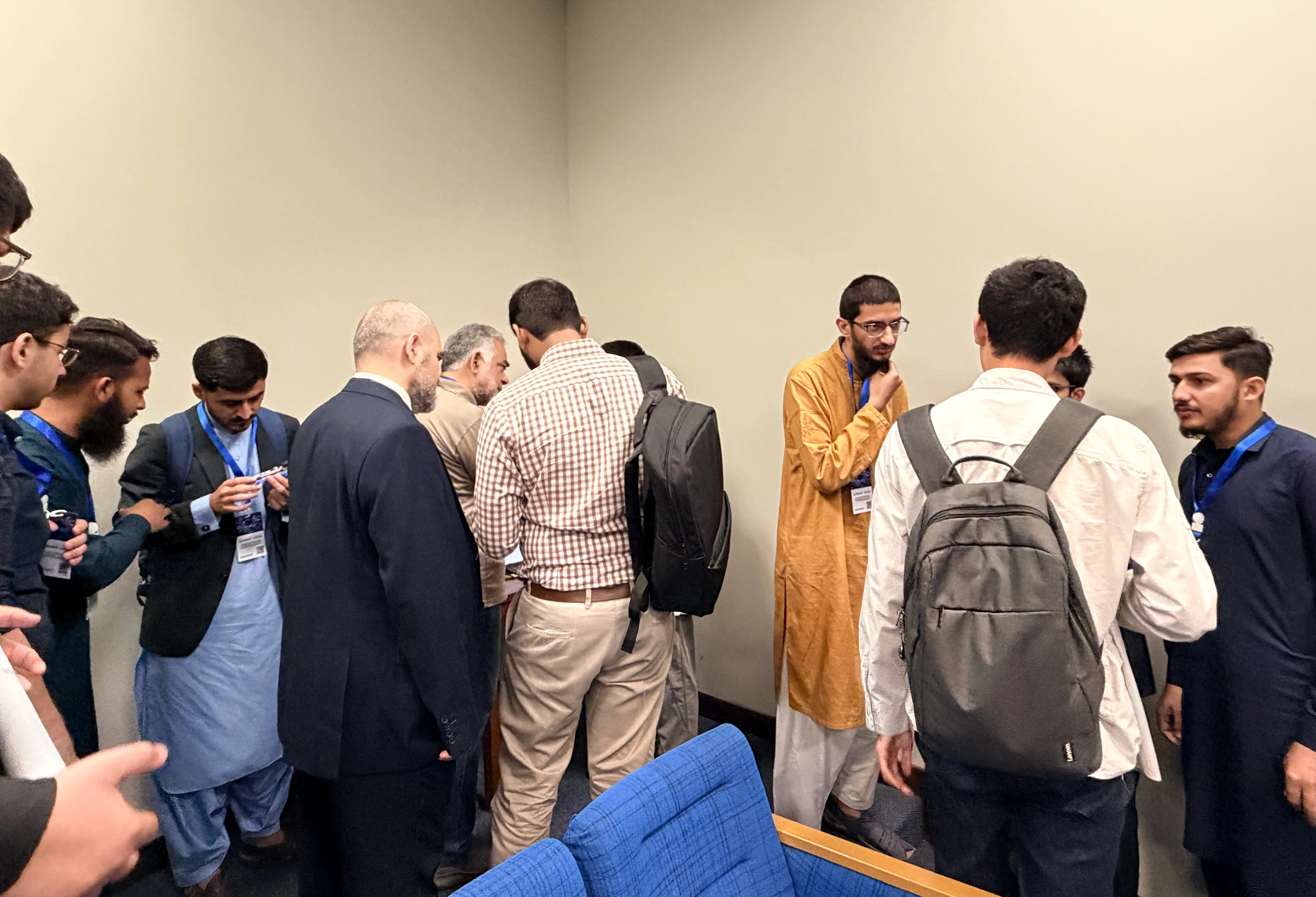
Post-presentation exchange on-site
Before and after the presentations, a steady stream of attendees came to engage with us, showing strong interest in both "One Student One Chip" and ECOS Studio. During the conference, we also felt firsthand the vibrant energy of Pakistan's industrial development and the rising wave of talented young people emerging in the field. Many posters centered on RISC-V related topics, with most authors being undergraduate and graduate students from universities across Pakistan. We were also invited to visit the teaching buildings and laboratories of the local LUMS University and UET University's School of Electronic Engineering, giving us a direct impression of their sustained investment in the semiconductor field. Collaboration between universities and industry is also very close — many companies invest in building laboratories and research centers on campuses, creating small-scale talent cultivation ecosystems that serve as important incubators for engineers. Several local semiconductor companies (such as 10xEngineers) have become key pillars of the industry, driving industrial development while also providing pathways for talent, forming the beginnings of a virtuous cycle.
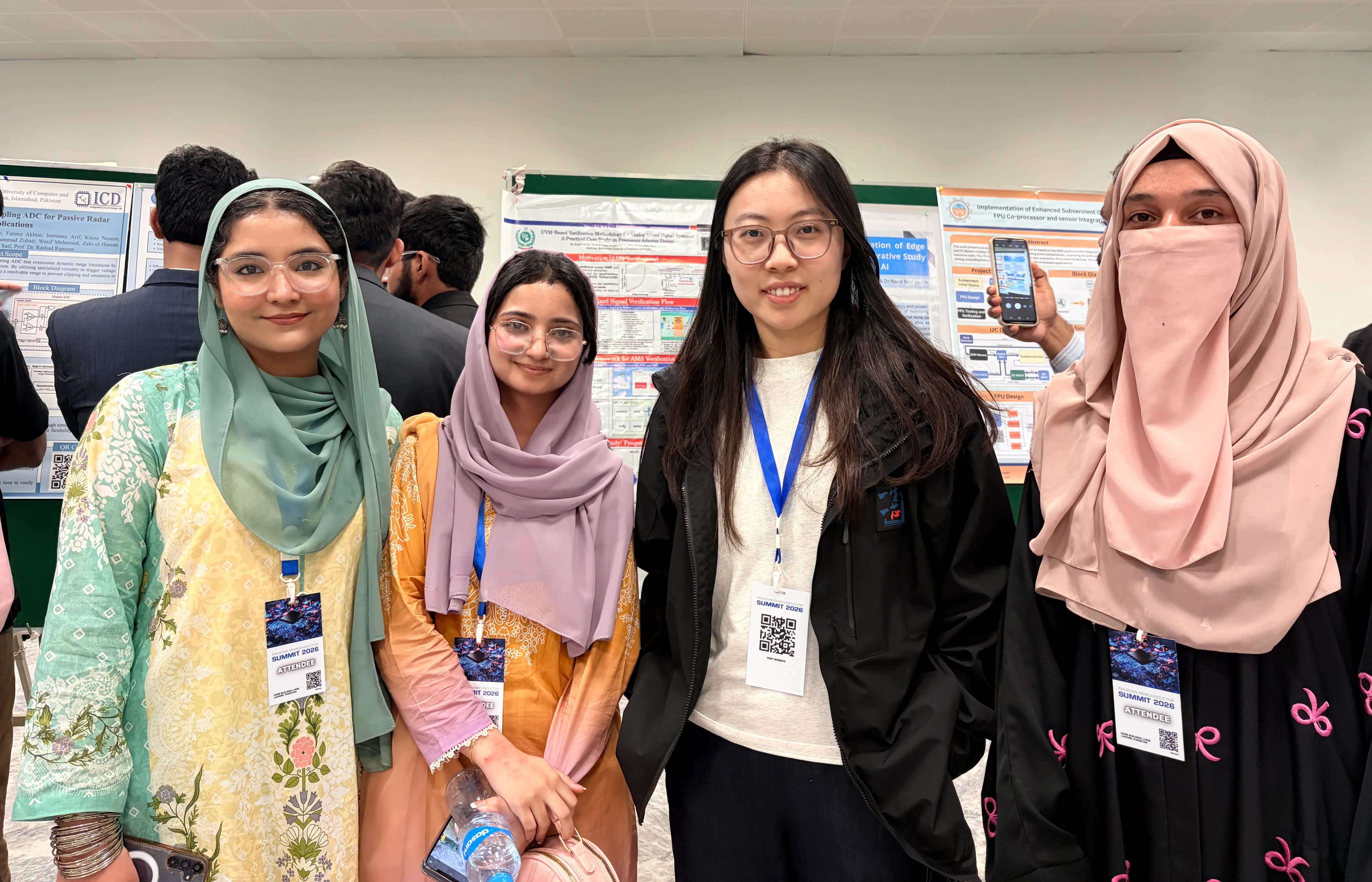
Local students introducing their project posters to us
One of the most memorable moments of the entire summit came when Bilal Zafar, founder of 10xEngineers, interacted with the audience during his presentation: "Can you guess what percentage of the global market Pakistan holds in this industry?" Some answered 1%, others 5% — but the actual figure turned out to be 0.002%. Someone in the audience immediately responded: "Better than zero." The room came alive. It was a clever response, and more than that, a genuinely forward-looking attitude. Maintaining confidence amid uncertainty, seeing possibility within the gap. Perhaps not yet strong enough — but this is not an endurance race. It is a game of chess where capability, judgment, and opportunity are all indispensable. Being ahead now does not mean staying ahead, being behind now does not mean staying behind.
The board can change in an instant — and it is you and I who hold the pieces.